What Are Wedding Silhouette Pictures?
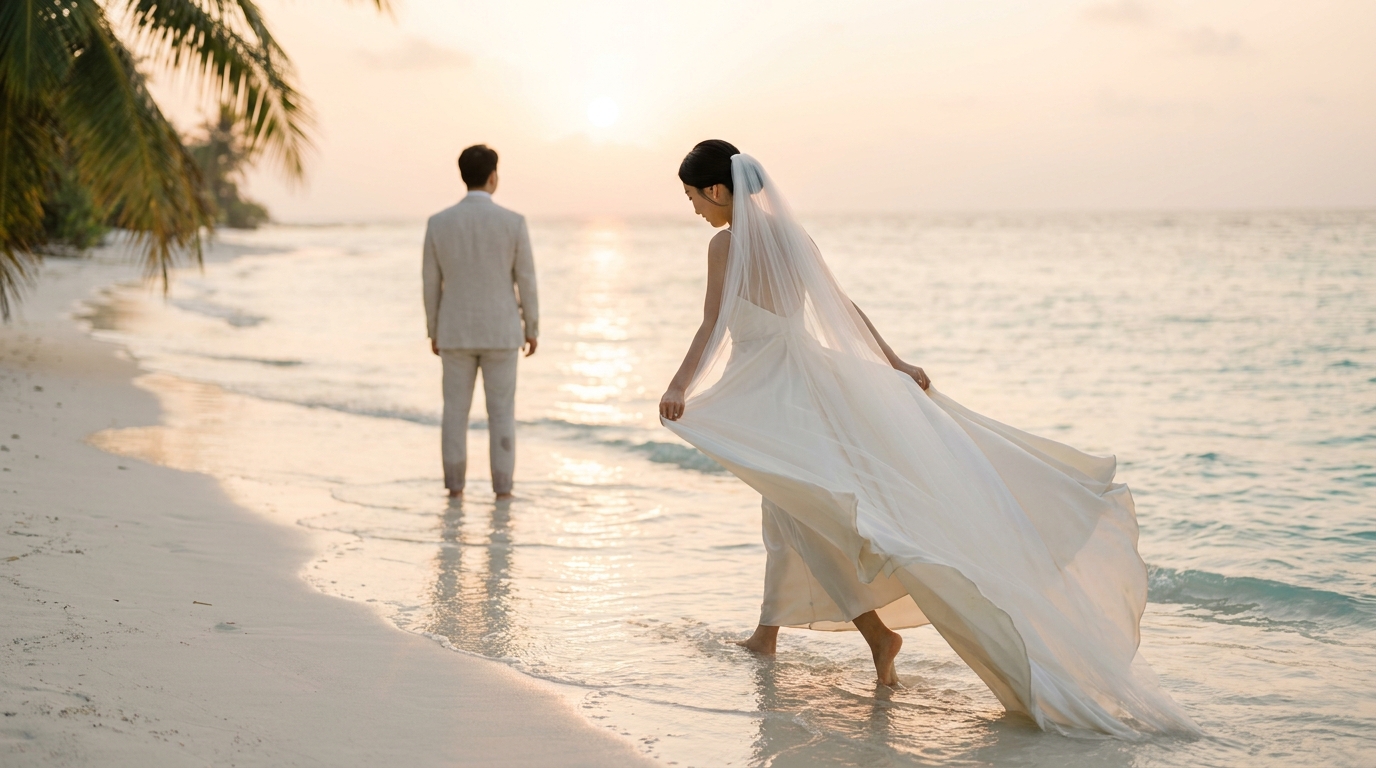
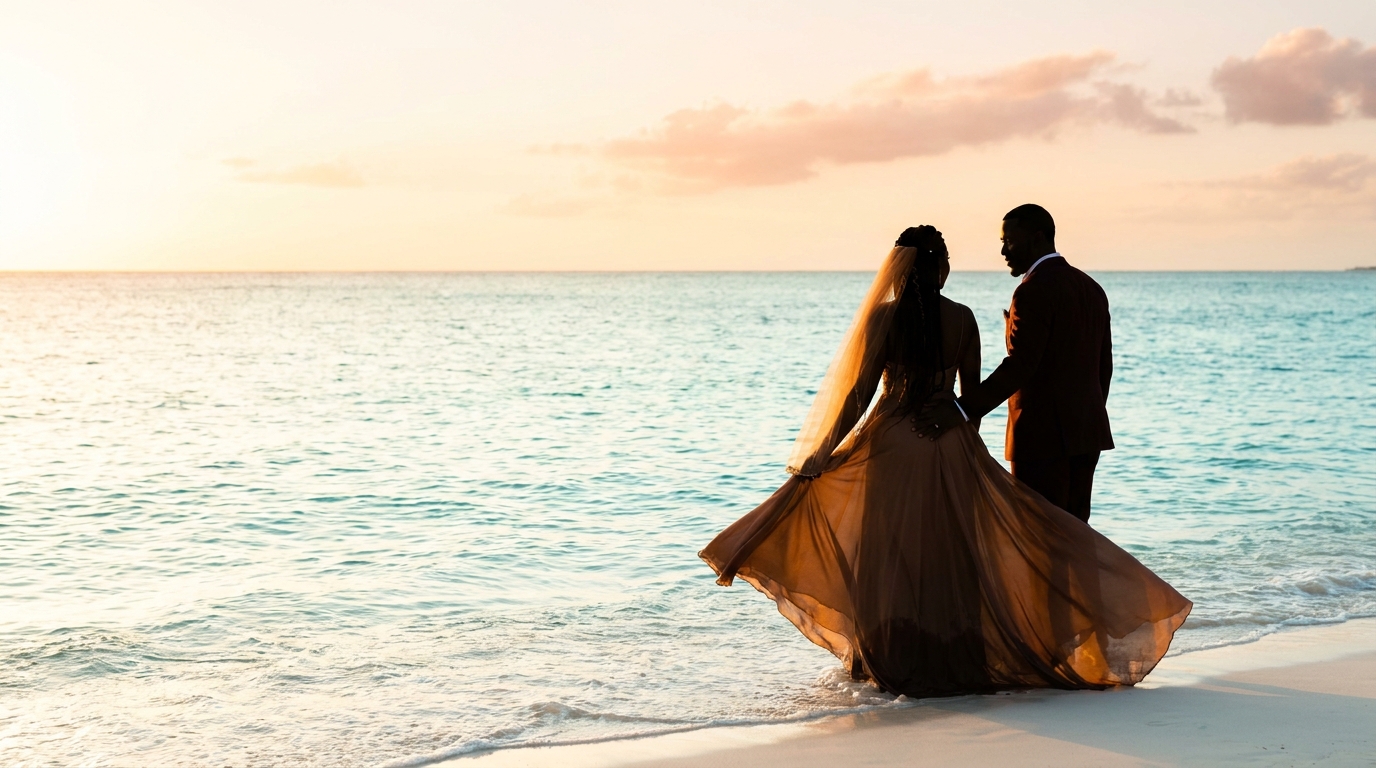
Wedding silhouette pictures are backlit photos where the couple appears as a dark outline against a bright background, typically shot during golden hour with the light source directly behind them.
The technique itself is straightforward: the photographer exposes for the bright sky rather than the subjects, turning the couple into a crisp, dark shape against vivid color. When it works, you get a dramatic, almost cinematic image. When it doesn’t, you get a murky, shapeless blob that looks like a camera malfunction.
What separates a stunning silhouette from a failed one isn’t luck or even raw talent. It’s planning. The light has to be in the right position, the couple has to be in the right pose, and the photographer has to nail the exposure in a window that lasts roughly 20 minutes. That’s it. Miss any one of those three elements, and the shot falls apart.
Why Do Silhouette Photos Fail at Most Weddings?
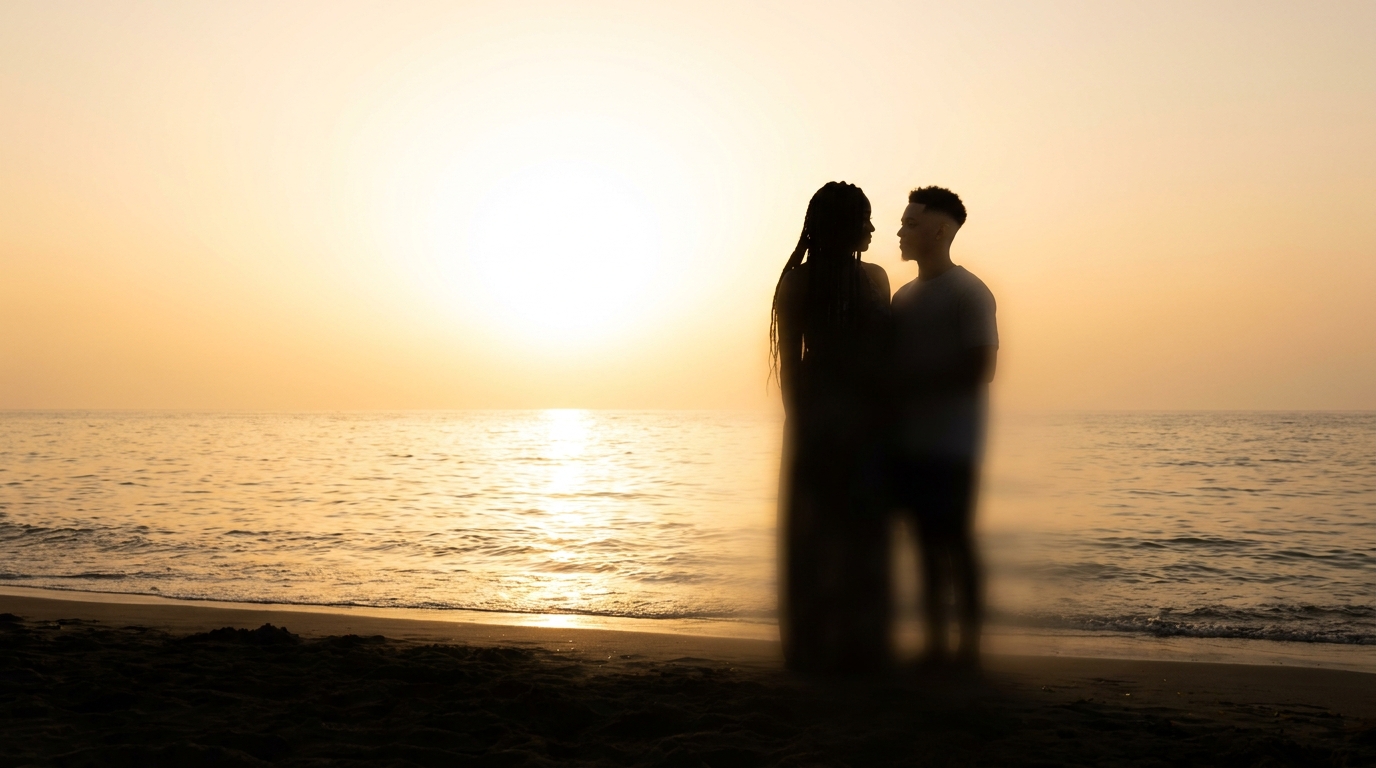
Most silhouette photos fail because couples schedule ceremonies at the wrong time, photographers use incorrect exposure settings, or the background lacks sufficient contrast to create clean outlines.
Here’s the uncomfortable reality: your photographer is under enormous pressure on your wedding day. A typical wedding with 80 to 120 guests produces 1,500 to 3,000 photos, with the final gallery curated down to 400 to 800 edited images. [Source: Event] In that environment, photographers naturally prioritize shots with a higher success rate over a technically fragile silhouette that requires perfect conditions.
The Timing Problem: Why 4 PM Ceremonies Don’t Work
If your ceremony starts at 4 PM in Cancun in March, it ends around 4:30 or 4:45 PM. Sunset that day is approximately 6:47 PM. That leaves a two-hour gap filled with family formals, cocktail hour logistics, and bridal party shots. By the time the silhouette window arrives, you’re already seated at dinner, your photographer is shooting table details, and the light is gone.
The math simply doesn’t work unless you plan backward from sunset, which most couples don’t do.
The Positioning Problem: When Your Venue Faces the Wrong Direction
Silhouettes require the light source directly behind the couple. If your beach ceremony faces east, the sunset is behind your guests, not behind you. No amount of photographer skill fixes a venue that faces the wrong direction. Before booking, you need to confirm the orientation of your ceremony site relative to where the sun sets during your wedding month.
The Technical Problem: Exposure Settings That Ruin the Shot
Modern cameras are designed to expose for faces. Auto-exposure modes will try to brighten the couple, washing out the sky and destroying the silhouette effect. Photographers who haven’t practiced manual silhouette exposures often end up with a gray, muddy image where neither the couple nor the sky looks good. The camera needs to be told to ignore the subjects entirely and expose only for the brightest part of the frame.
When Is the Best Time for Silhouette Wedding Photos?
The best time is 15 to 30 minutes before sunset during golden hour, when the sun is low enough to backlight subjects but still bright enough to create strong contrast and warm color.
Golden Hour Windows by Season and Location
Golden hour isn’t a fixed time. It shifts dramatically based on your destination and the month of your wedding. Here’s what that looks like at popular destination wedding locations:
| Destination | Month | Approx. Sunset | Silhouette Window |
|---|---|---|---|
| Cancun, Mexico | March | 6:47 PM | 6:17 PM – 6:47 PM |
| Cancun, Mexico | June | 7:28 PM | 6:58 PM – 7:28 PM |
| Maui, Hawaii | December | 5:50 PM | 5:20 PM – 5:50 PM |
| Maui, Hawaii | June | 7:15 PM | 6:45 PM – 7:15 PM |
| Santorini, Greece | September | 7:30 PM | 7:00 PM – 7:30 PM |
| Punta Cana, DR | January | 6:10 PM | 5:40 PM – 6:10 PM |
| Bali, Indonesia | August | 6:10 PM | 5:40 PM – 6:10 PM |
Sunset times are approximate and shift by a few minutes each week. Confirm exact times for your wedding date using a sunrise/sunset calculator.
Why Sunrise Silhouettes Are Harder (But Possible)
Sunrise produces the same quality of light as sunset, so technically, morning silhouettes work. Practically, they’re a challenge. You’d need hair, makeup, and dressing done before dawn. In Cancun in March, sunrise is around 6:50 AM. That means being camera-ready by 6:20 AM. Some couples do “day after” sunrise sessions, which solves the scheduling problem but requires an extra morning of effort during your trip.
The 20-Minute Rule: How Long You Actually Have
The usable silhouette window is roughly 20 minutes. Before that window, the sun is too high and too harsh. After it, the light drops below the horizon and contrast disappears. Your photographer gets maybe 15 to 20 frames in that window. There’s no second chance. If the couple isn’t in position when the light hits, the opportunity is gone.
What Makes a Good Silhouette Photo Location?
Good silhouette locations have an unobstructed view of the horizon, minimal foreground clutter, and the light source directly behind the couple with at least 15 feet of clear space around them.
Beach Venues: Why They’re Ideal (and What Can Still Go Wrong)
About 65% of weddings now use outdoor venues like gardens, barns, and beaches. [Source: Mmcginvest] Beaches are particularly well-suited for silhouette wedding photography because they offer a flat, unobstructed horizon line and wide-open sky.
But beaches can still fail you. Palm trees, resort structures, jetties, and other couples taking photos can all intrude on the frame. Tidal conditions matter too. If the tide is high during your window, you may lose the stretch of sand you were counting on. Check with your venue’s site map to understand exactly where the horizon is clear.
Indoor Venues: When Silhouettes Are Impossible
Traditional indoor ballrooms, enclosed restaurants, and windowless event spaces simply can’t produce natural-light silhouettes. Hotels account for about 18% of wedding receptions. [Source: Mmcginvest] If your reception is indoors, you’ll need to plan a separate outdoor session or use artificial backlighting, which we’ll cover below.
Backup Locations: What to Scout Before Your Wedding Day
Weather, construction, and unexpected obstacles can ruin your primary location. Ask your photographer to scout at least two backup spots within a five-minute walk of your venue. A rooftop, a nearby overlook, or even a parking lot with a clear western view can work in a pinch. The background doesn’t need to be pretty. In a silhouette, it’s just color and light.
How Do You Pose for Silhouette Wedding Pictures?
Effective silhouette poses require clear separation between bodies, defined profiles rather than front-facing positions, and deliberate negative space to create recognizable shapes against the background.
The Profile Kiss: Why It Works Better Than Face-to-Face
When two people face each other straight on, their silhouettes merge into a single, unreadable mass. A profile kiss, where both faces are visible from the side, creates two distinct outlines that read instantly as “couple.” Tilt foreheads together slightly, keep noses from overlapping, and leave a sliver of sky between your bodies.
Hand Placement That Creates Definition (Not Blobs)
Hands pressed flat against a partner’s back disappear into the silhouette. Instead, extend fingers slightly, hold hands with arms away from the body, or place one hand on the side of a face. Any gesture that creates a gap between the arm and the torso adds visual interest. Think about creating triangles of light between your limbs.
Dress Positioning: Making Your Silhouette Recognizable
A-line and ball gown skirts photograph beautifully in silhouette because their shape is immediately recognizable. Fitted dresses work too, but the couple needs more separation to avoid looking like a single column. If you’re wearing a veil, let it trail or hold it out to the side. Flowing fabric caught in a breeze adds movement and drama to the outline.
What Equipment Do Photographers Need for Silhouette Shots?
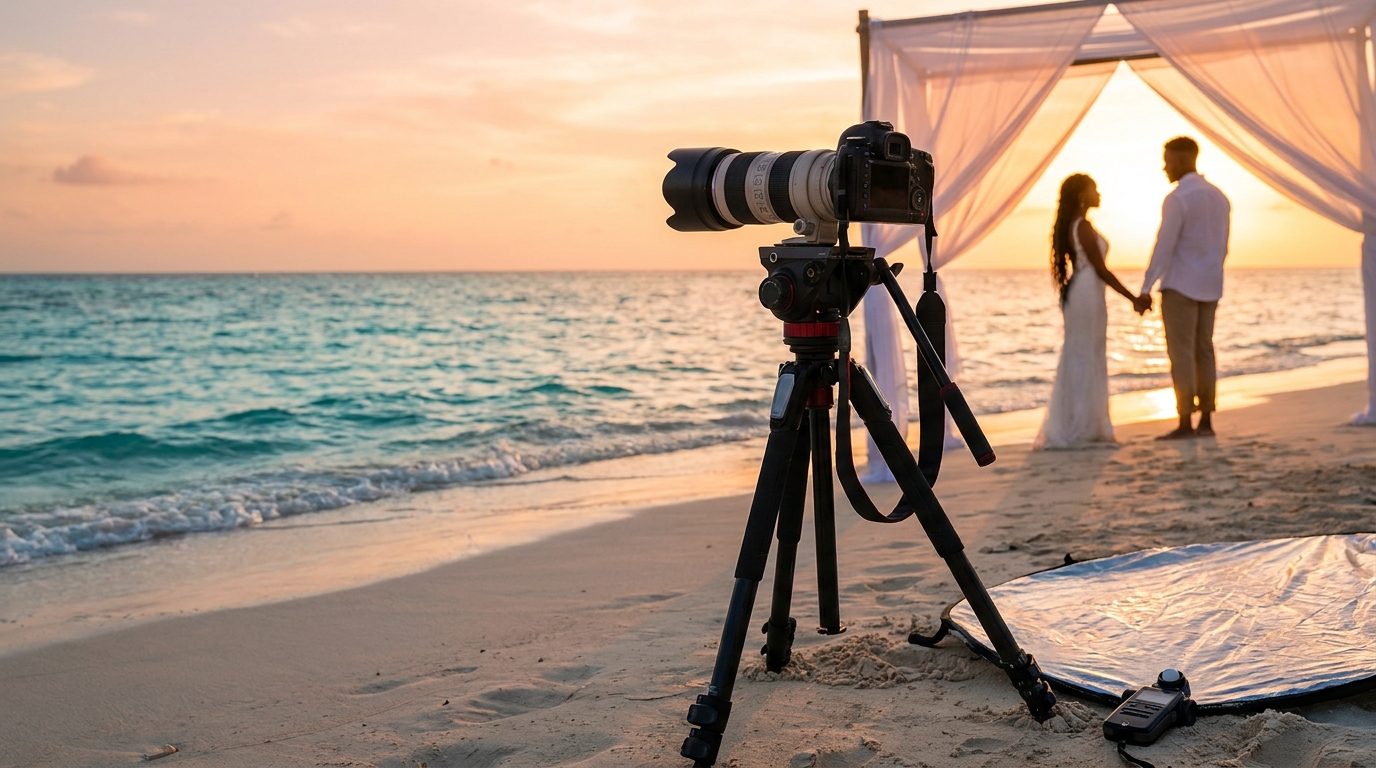
Photographers need a camera with manual exposure control, a lens with at least f/2.8 aperture, and ideally a second body for backup since the timing window is brief and non-repeatable.
The lens matters more than the camera body. A 35mm or 50mm prime lens at f/2.8 or wider gives the photographer flexibility to shoot fast in changing light. Zoom lenses work but are slower to adjust. A second camera body eliminates the risk of a card error or battery failure costing you the entire window. Most experienced wedding photographers already carry two bodies, so this shouldn’t be an unusual request.
One piece of equipment that’s often overlooked: a smartphone with a sunset-tracking app. Apps like Sun Surveyor or The Photographer’s Ephemeris show exactly where the sun will be at any time on any date, letting the photographer pre-plan the exact shooting position days or weeks in advance.
Do Silhouette Photos Cost Extra?
Most photographers include silhouette photos in standard packages if timing allows, but dedicated golden hour sessions typically cost $400 to $800 extra for 30 to 45 minutes of shooting outside standard ceremony coverage.
What’s Included in Standard Packages
Photographers generally treat sunset silhouette wedding pictures as a creative shot technique, not a separate product category. If golden hour falls within your contracted coverage window, most photographers will attempt silhouettes at no additional charge. Some vendors explicitly include add-ons like assistant photographers at no extra cost. [Source: Zola]
When You Need to Pay for Extended Coverage
The issue arises when golden hour falls outside your package. A standard 6 to 8 hour photography package that starts at noon may end at 6 or 8 PM. If sunset is at 7:30 PM, you’ll need to extend coverage. Industry practitioners typically charge $150 to $300 per additional hour, though rates vary widely by market and photographer experience.
Destination Wedding Considerations: Travel and Timing Fees
For destination weddings, the cost picture gets more complex. If your silhouette location is off-site from the ceremony venue, photographers may charge for transportation time and logistics. A 20-minute shuttle ride to a beach overlook eats into the shooting window and may require a separate vehicle. Factor in $50 to $150 for transportation logistics, depending on your destination. When budgeting, keep in mind that couples spend roughly 27% to 40% of their total wedding budget on the venue alone, so photography add-ons are a relatively small incremental cost. [Source: Saradoesseo]
All costs vary by location, photographer, and package structure. Get itemized quotes from at least three photographers before booking.
How Do You Schedule Your Wedding Day for Silhouette Photos?
Schedule your ceremony to end 45 to 60 minutes before sunset, allowing time for family photos before dedicating the final 20 minutes of golden hour exclusively to silhouette shots.
Ceremony Timing: Working Backward from Sunset
Start with your sunset time and work backward. If sunset in Tulum in November is approximately 5:35 PM, your silhouette window opens around 5:05 PM. You need 30 minutes for family formals before that. So family photos start at 4:35 PM. Your ceremony should end by 4:30 PM, which means it starts around 4:00 PM. Every minute of your day flows from that sunset time.
The Family Photo Buffer: Why You Need 30 Minutes
Family formals always take longer than expected. Grandma needs help walking to the photo spot. Uncle Dave is at the bar. The flower girl is crying. Build in 30 minutes minimum for family photos between the ceremony and your silhouette session. If you finish early, your photographer gets bonus time for creative shots. If you run late, you still make the window.
Cocktail Hour Conflicts: How to Handle Guest Management
Your silhouette session will overlap with cocktail hour. That’s fine. Your guests don’t need you there for the first 20 minutes of drinks. Assign your wedding planner or a trusted friend to manage the cocktail hour start while you’re shooting. Brief your DJ or band to keep energy up. Guests rarely notice a 20-minute absence if the bar is open and the music is playing.
What Are the Alternatives If Your Venue Won’t Work?
If your venue doesn’t support silhouettes, alternatives include off-site golden hour sessions at nearby beaches or overlooks, next-day shoots, or creative artificial backlighting setups with strobes.
With approximately 35,829 wedding venues in the United States alone, couples have a wide range of options. [Source: Saradoesseo] The most important venue features for beach wedding silhouette photos aren’t the venue type itself but light direction, a clear background, and enough space to separate the couple from visual clutter.
Off-Site Sessions: Logistics and Transportation
Many destination wedding couples book a 30-minute off-site session at a nearby beach or cliff. In Santorini, that might mean a short drive to a caldera overlook. In Jamaica, it could be a walk down the resort beach to a quieter stretch. Coordinate transportation in advance and confirm that your photographer’s contract covers off-site shooting. Browse our photographer directory to find vendors who specifically note location scouting in their services.
Next-Day Shoots: Pros and Cons for Destination Weddings
A “day after” session gives you unlimited time, no schedule pressure, and the freedom to choose the perfect location. The downside: you need to get back into your wedding attire, redo hair and makeup (or go for a more relaxed look), and carve out time during what’s usually a recovery day. For destination weddings, this works well because you’re already at the location for several days. Only about 2% of couples look for a fully blank, customizable space for their wedding. [Source: Saradoesseo] But for a next-day shoot, even a simple stretch of open beach becomes the perfect canvas.
Artificial Lighting: When It Works (and When It Looks Fake)
A powerful off-camera strobe or LED panel placed behind the couple can simulate a sunset silhouette effect. This works best in controlled environments: a dark beach after sunset, a dimly lit courtyard, or an indoor space with high ceilings. The risk is that artificial backlighting can look flat and harsh compared to natural golden hour light. If your photographer suggests this approach, ask to see examples from their portfolio shot with the same equipment they’ll use at your wedding.
What Questions Should You Ask Your Photographer?
Ask if they’ve shot silhouettes at your specific venue, what their backup plan is if weather interferes, and whether they’ll scout the location beforehand to confirm positioning and timing.
Here’s a checklist of specific questions to bring to your photographer consultation:
-
Have you shot silhouettes at this exact venue before? If yes, ask to see examples. If no, ask if they’ll do a pre-wedding scout.
-
What time will you need me for the silhouette session? This confirms they’ve checked sunset times for your date.
-
What’s your backup plan if it’s cloudy? Overcast skies can still produce silhouettes, but the technique changes. You want a photographer who has a plan, not one who shrugs.
-
Will this require extended coverage hours? Get the cost in writing before signing the contract.
-
Do you shoot silhouettes in manual mode? This is a basic competency check. The answer should be an immediate yes.
-
How many silhouette images can I expect in my final gallery? A realistic answer is 5 to 15 edited images from a 20-minute session.
Ready to plan your destination wedding timeline around the perfect light? Use our venue directory to find beach and outdoor locations that face west for optimal sunset silhouettes, complete with sunset time data for every month of the year.
Frequently Asked Questions
Below are the most common questions couples ask about planning and executing wedding silhouette pictures at destination weddings.
Can you get silhouette photos on a cloudy day?
Yes, but the results differ. Thick overcast eliminates the vivid sky colors, producing a softer, more muted silhouette. Partial cloud cover can actually enhance the shot by adding texture and drama to the background. Your photographer should switch to slightly different exposure settings, metering for the brightest patch of sky rather than the horizon line.
Do silhouette photos work with large bridal parties?
Groups of more than four people tend to merge into a single dark mass. If you want a group silhouette, space everyone at least two feet apart and have them strike distinct poses. Couples-only silhouettes almost always produce stronger images because two figures are easier to separate and define.
How far in advance should I confirm sunset times for my wedding date?
Sunset times for any date and location can be calculated years in advance with high accuracy. Confirm the exact time about one month before your wedding and share it with your photographer, planner, and venue coordinator. Recheck the week of your wedding in case you need to adjust by a minute or two.
Will my photographer automatically take silhouette photos?
Not necessarily. Many photographers prioritize shots with higher success rates given the pressure of capturing 1,500 to 3,000 photos in a single day. [Source: Event] If silhouettes are important to you, put the request in writing in your shot list and discuss timing logistics during your planning meetings.
Can I get silhouette photos at a resort with buildings in the background?
Buildings, palm trees, and structures can actually add interesting shapes to a silhouette, as long as they don’t overlap with the couple’s outline. The key is positioning. Your photographer needs to find an angle where the couple stands against open sky, even if structures frame the edges of the image.
Are silhouette photos possible at a winter wedding?
Winter sunsets happen earlier, which can actually make scheduling easier. A December wedding in Hawaii has sunset around 5:50 PM, giving you a silhouette window starting at 5:20 PM. The lower sun angle in winter months often produces richer, warmer colors along the horizon, which can make for especially striking backgrounds.
What’s the difference between a silhouette photo and a backlit photo?
In a silhouette, the couple is completely dark with no visible facial features or clothing detail. In a backlit photo, the photographer adds fill light (from a flash or reflector) to illuminate the couple’s faces while keeping the glowing background. Both use the same positioning, but the exposure and lighting choices differ. Discuss with your photographer which style you prefer, or request both during the same session.
Should I schedule my ceremony specifically around golden hour?
If silhouette photos are a top priority, yes. Working backward from sunset is the single most effective thing you can do to guarantee the shot. A ceremony that ends 45 to 60 minutes before sunset gives you enough buffer for family photos while still making the silhouette window. It requires building your entire day timeline around the light, but the results are worth the extra planning effort.