What Does Formal Dress Code Mean for a Wedding?
Formal wedding attire means floor-length gowns or sophisticated cocktail dresses for women, and dark suits or tuxedos for men, a step below black-tie but more elevated than cocktail.
You received a wedding invitation, flipped it over, and spotted one word: formal. Now you’re staring at your closet wondering what a formal dress code wedding actually requires. You’re not alone. A YouGov survey found that 79% of Americans say it’s inappropriate to dress casually despite a formal dress code at a wedding. [Source: The Knot] That means most people take the label seriously, yet the term itself sits in a confusing gray zone between black-tie and semi-formal.
Here’s the short version: formal wedding attire asks you to show up polished and elevated. For women, that means a floor-length gown, an elegant midi dress, or a refined cocktail dress in luxe fabrics. For men, a well-fitted dark suit with a tie is the baseline, and a tuxedo is welcome if the event leans dressier. The goal is to look like you belong at a refined evening event, not a casual brunch or a state dinner.
How Does Formal Differ from Black-Tie and Semi-Formal?
Formal sits between black-tie (tuxedos required, floor-length gowns expected) and semi-formal (cocktail dresses and suits), allowing more flexibility while still expecting elevated, polished attire.
The confusion is understandable. These dress code labels overlap in ways that frustrate even seasoned wedding guests. Here’s how they actually break down.
Black-Tie vs. Formal: The Key Distinctions
Black-tie is prescriptive. Men wear tuxedos, period. Women wear floor-length gowns. Bank-style guidance confirms that a tuxedo is reserved for black-tie and formal evening ceremonies. [Source: Jos. A. Bank] Formal, by contrast, gives men the option of a dark suit instead of a tuxedo. Women can choose between a floor-length gown and an elegant shorter dress. The fabrics and silhouettes still need to read “evening” and “refined,” but the rules are less rigid.
Formal vs. Semi-Formal: Where the Line Blurs
Semi-formal (sometimes called “cocktail attire”) is the most common wedding dress code. It allows cocktail dresses, dressy separates, and suits in lighter colors. Formal steps everything up: darker color palettes, richer fabrics, and longer hemlines. If semi-formal is a nice restaurant dinner, formal is an evening at the opera.
Regional Variations: Why ‘Formal’ Means Different Things
A formal wedding in Manhattan might look very different from a formal wedding in Cancun. In one survey, 34% of weddings listed “formal” as the dress code, making it the most common category. [Source: The Knot] But regional norms shape how guests interpret it. Southern formal weddings often lean closer to black-tie, while West Coast formal events may accept more relaxed silhouettes. When in doubt, check the venue type and time of day for additional cues.
| Category | Women’s Attire | Men’s Attire | Fabric Expectations | Typical Venues |
|---|---|---|---|---|
| Black-Tie | Floor-length gown | Tuxedo with bow tie | Silk, satin, velvet | Ballrooms, estates, luxury hotels |
| Formal | Floor-length gown, elegant midi, or refined cocktail dress | Dark suit with tie, or tuxedo | Silk, chiffon, crepe, satin | Ballrooms, upscale restaurants, historic venues, resort event spaces |
| Semi-Formal / Cocktail | Cocktail dress, dressy separates, midi dress | Suit (lighter colors acceptable), dress shirt with or without tie | Cotton blends, lighter silks, linen (seasonal) | Gardens, rooftops, restaurants, vineyards |
Find Your Wedding Venue & Guest Hotels
Compare resort rates, read verified guest reviews, and book with free cancellation. Filter by wedding-friendly properties at your destination.
Free cancellation on most properties. No booking fees.
Search HotelsWhat Should Women Wear to a Formal Wedding?
Women should wear a floor-length gown, sophisticated midi dress, or elegant cocktail dress in luxe fabrics like silk, chiffon, or velvet, and avoid casual prints, short hemlines, or overly revealing cuts.
Dress Length: Floor-Length vs. Cocktail-Length
Floor-length is the safest choice for a formal wedding. It reads unambiguously dressy and works for both evening and daytime ceremonies. That said, a well-constructed midi or ankle-length dress in the right fabric can absolutely work. Credible wedding guides confirm that formal wedding attire for women includes long dresses, midi dresses, elegant cocktail dresses, or polished jumpsuits in refined fabrics. [Source: BrideBox] What doesn’t work: anything above the knee. Save shorter hemlines for cocktail or semi-formal events.
Fabric and Texture Rules
Fabric is what separates a formal outfit from a cocktail one. Aim for silk, satin, organza, chiffon, crepe, or velvet. These materials catch light, drape well, and signal formality without you having to overthink the silhouette. Avoid cotton, jersey, linen blends, or anything that wrinkles easily. A simple sheath dress in satin will always read more formal than an embellished dress in cotton.
Colors and Patterns That Work (and What to Avoid)
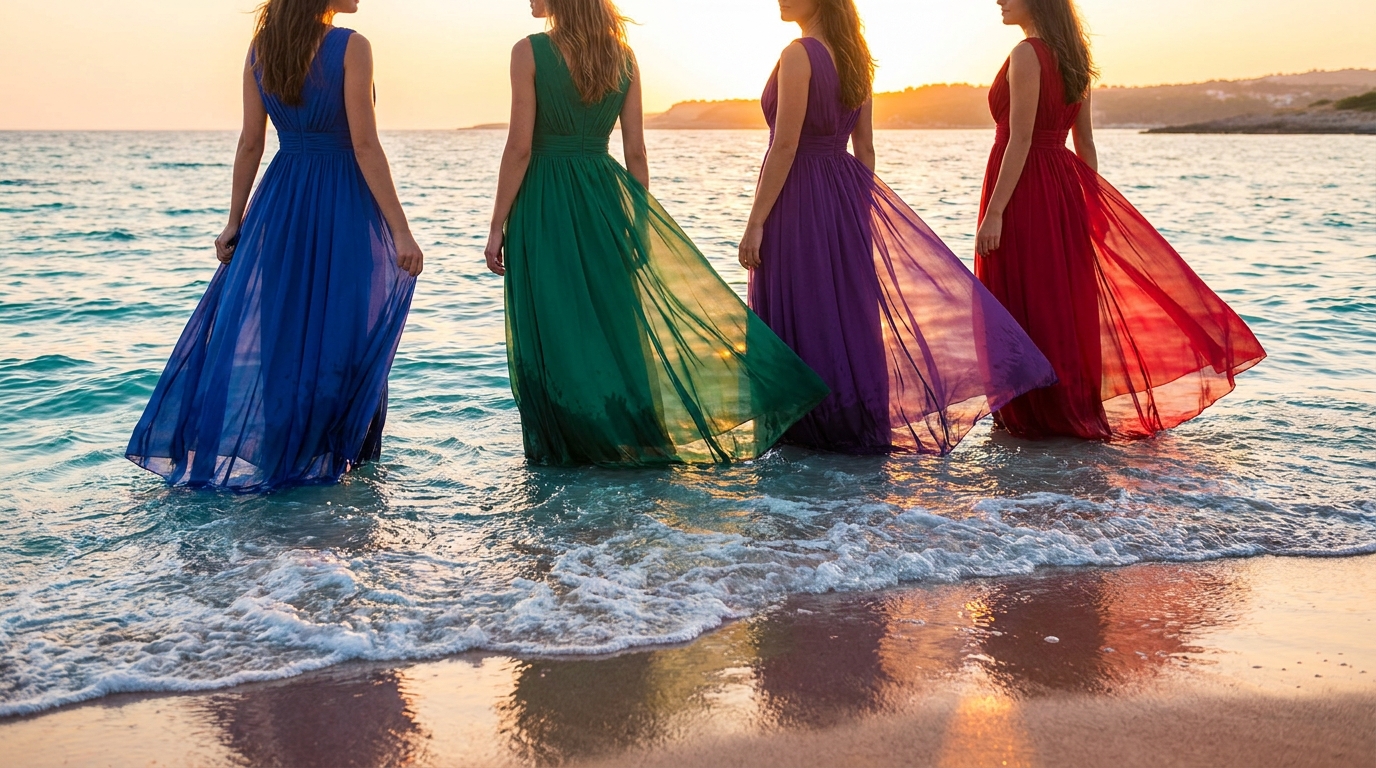
Deep jewel tones (emerald, navy, burgundy, sapphire) are classic formal choices. Black is always appropriate for evening formal weddings. Muted metallics, dusty rose, and plum also work well. The one hard rule: avoid white, ivory, cream, champagne, or any shade that could read as bridal. Multiple style guides flag this as the clearest and most repeated guest mistake. [Source: The Knot] Bold tropical prints and busy patterns generally skew too casual for formal events, though a subtle floral in a dark palette can work if the fabric is elevated.
Shoes and Accessories for Formal Attire
Heels are the standard, but dressy block heels or embellished flats are perfectly acceptable, especially for long ceremonies. Pair your outfit with a clutch (not a large tote or crossbody bag), restrained jewelry, and a wrap or shawl if the venue is air-conditioned. The goal is intentional polish. Every accessory should look like a deliberate choice, not an afterthought.
What Should Men Wear to a Formal Wedding?
Men should wear a dark suit in navy, charcoal, or black with a dress shirt and tie, or a tuxedo if the event leans more formal. Avoid light-colored suits or casual fabrics.
Nearly 50% of grooms choose to wear a suit on their wedding day, while 27% wear a tuxedo. [Source: Jos. A. Bank] As a guest, your job is to complement the couple’s formality without competing with it.
Suit vs. Tuxedo: When Each Is Appropriate
For most formal weddings, a dark suit is the right call. A tuxedo is welcome but not required unless the invitation specifically says “black-tie.” If the wedding is an evening event at a ballroom or luxury hotel, a tuxedo will fit right in. For daytime formal or outdoor formal, a well-tailored dark suit is the better choice. A navy or charcoal suit is the safest option for most formal weddings. [Source: Jos. A. Bank]
Shirt, Tie, and Pocket Square Guidelines
A crisp white dress shirt is the foundation. Pair it with a conservative silk tie in a solid color or subtle pattern. A pocket square adds polish but should stay understated: a clean white square fold or a simple pattern that complements (not matches) the tie. Skip novelty ties, loud patterns, or anything you’d wear to a themed party.
Shoe and Accessory Expectations
Black leather dress shoes are the standard for formal weddings. Oxfords or cap-toe styles work best. Brown shoes, loafers without socks, and suede are all too casual for this dress code. A leather belt that matches the shoe color, a simple watch, and possibly cufflinks round out the look.
Does Formal Dress Code Change for Destination Weddings?
Formal dress code at destination weddings typically relaxes slightly in fabric and weight, but the silhouette and polish level remain the same as traditional formal attire.
About 20 to 25% of U.S. weddings are destination weddings. [Source: Zipdo] That means a significant number of guests face the “formal but make it beach” paradox every year. The Knot advises letting the location guide you while still abiding by the couple’s set wedding dress code, noting that black-tie means very different things in tropical Tulum versus snowy Colorado. [Source: The Knot]
Beach Formal: What It Actually Means
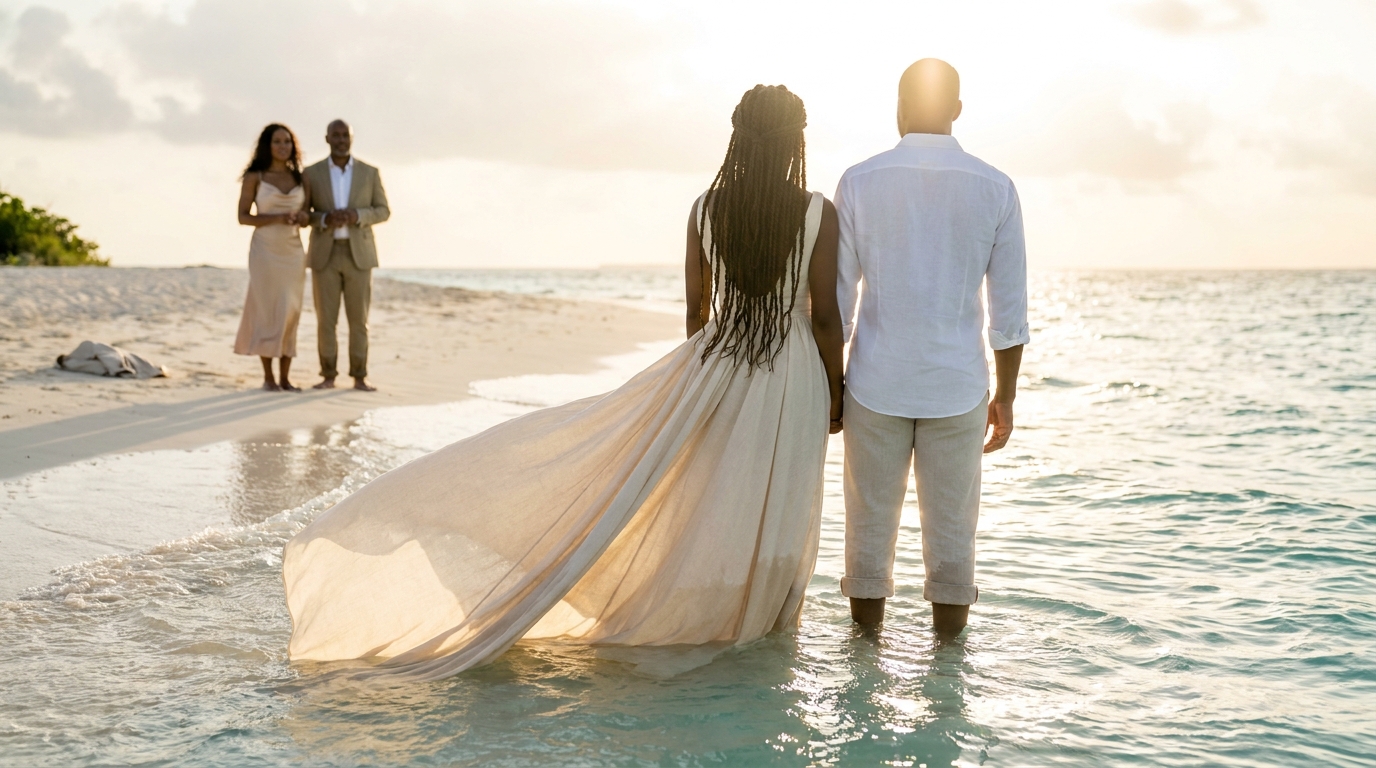
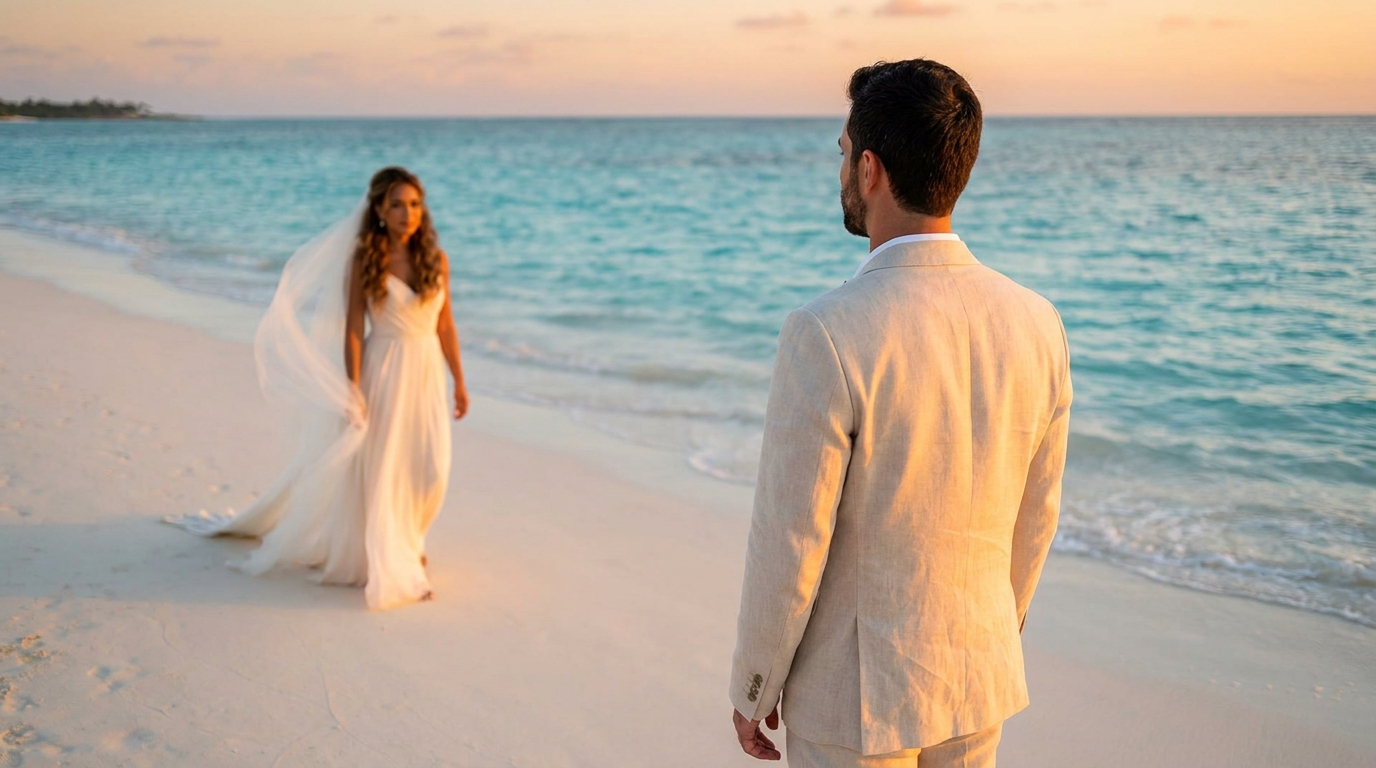
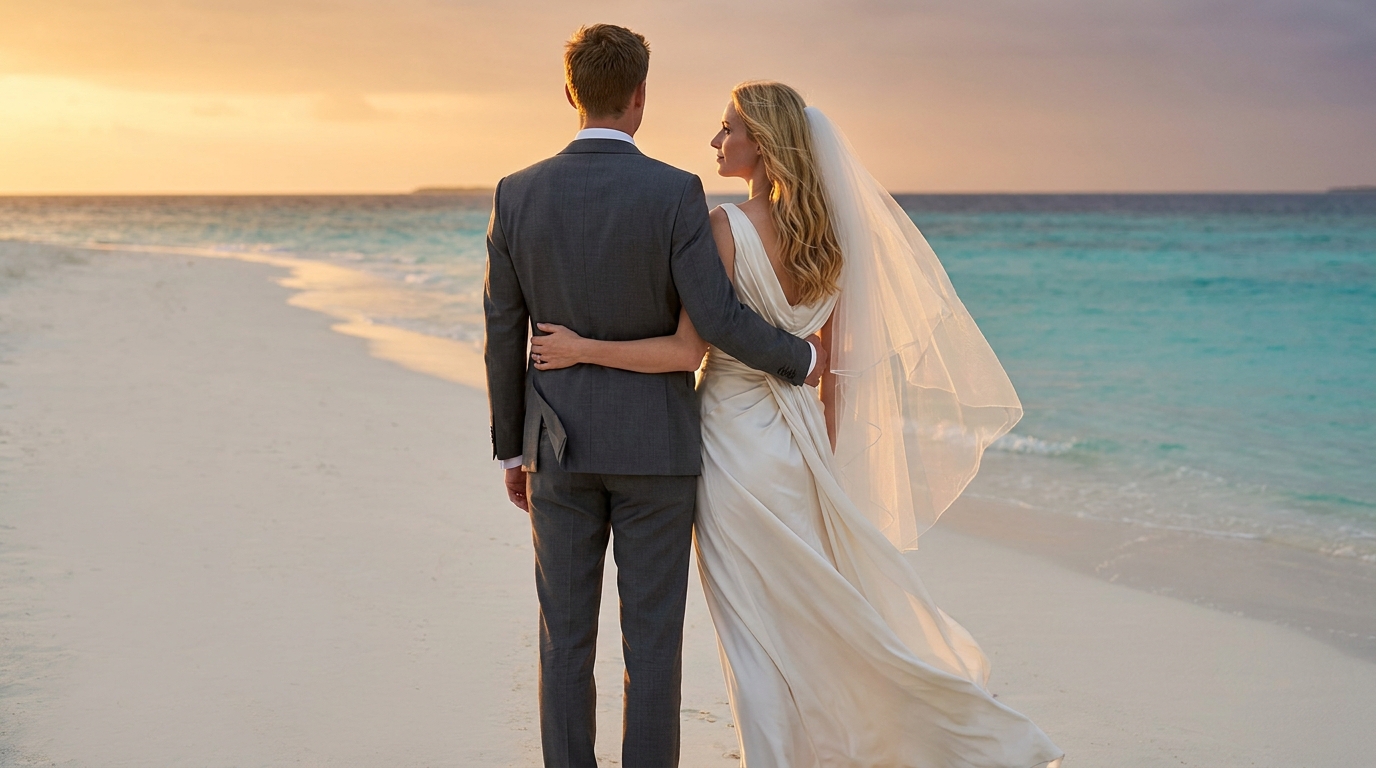
Beach formal is not an oxymoron, but it does require some translation. The formality stays the same. The construction changes. Women can swap heavy satin for flowing chiffon. Men can choose a lighter-weight wool suit instead of a heavy winter fabric. But flip-flops, linen shorts, and sundresses are still off-limits. If you’re attending a formal beach wedding, our guide to beach wedding dress code breaks down the nuances further.
Tropical and Warm-Weather Formal Adjustments
In tropical or beach destinations, experts recommend lighter fabrics, breezier silhouettes, and sometimes dressy sandals or wedges instead of heavier formal construction. [Source: Jovani] A practical rule from multiple sources: dress toward the more formal end of the stated code, in the lightest version that suits the setting. For example, a formal wedding in Hawaii may still call for a gown, but likely in breathable chiffon with destination-appropriate styling. For more detailed guidance, check out our resource on formal wear for destination weddings.
Evening vs. Daytime Formal at Destinations
Time of day matters more at destination weddings than almost anywhere else. An evening formal event at a resort ballroom calls for the same dark suits and floor-length gowns you’d wear at home. A daytime formal ceremony on a terrace allows slightly lighter colors and fabrics while keeping the same level of polish. If the invitation says formal and the ceremony starts at 4 PM on a beach, lean toward lighter-colored formal attire with dressy shoes that can handle the terrain.
What Are the Biggest Formal Wedding Dress Code Mistakes?
Common mistakes include wearing overly casual fabrics, choosing too-short hemlines, skipping tailoring, or wearing brown shoes with formal suits, all of which signal a misunderstanding of the dress code.
-
Wearing white or bridal-adjacent colors. This is the most repeated mistake across every style guide. Avoid white, ivory, cream, and champagne entirely. [Source: The Knot]
-
Ignoring the stated dress code. “Formal” is not a suggestion. Showing up in jeans, sportswear, or casual sundresses reads as disrespectful. Tracy Mudd of The Wedding Travel Company notes that “the biggest mistake is to dress too simply.”
-
Ill-fitting clothing. An expensive suit that doesn’t fit properly looks worse than a budget suit that’s been tailored. Wedding style guides consistently flag ill-fitting suits as a common guest mistake.
-
Impractical shoes. Stilettos on grass, sand, or cobblestones are a recipe for misery. Formal doesn’t mean uncomfortable. Choose shoes that are dressy and functional for the venue.
-
Overdressing to the point of distraction. YouGov found that 77% of Americans say it’s inappropriate to wear an outfit more extravagant than the couple’s. [Source: The Knot] Formal means polished, not pageant.
-
Casual fabrics. Cotton, denim, jersey, and casual linen blends don’t belong at a formal wedding, regardless of the cut or color.
How Do You Dress Formally on a Budget?
Rent a gown or suit from rental services (often about a quarter of the purchase price), shop under-$100 edits from wedding-guest retailers, or invest in one versatile formal piece and rotate accessories.
BrideBox explicitly says you do not need to spend $500 to look formal and recommends that budget shoppers focus on a solid color, structured fabric, and good fit rather than elaborate details. [Source: BrideBox] The Knot also highlights formal-wedding dresses available under $100, proving that budget formalwear is realistic with strategic shopping. [Source: NY Times Wirecutter]
Here’s a practical budget formula:
-
Women: A solid-color midi or full-length dress in satin or chiffon, block heels, and minimal jewelry. Total cost can stay well under $150 if you shop sales or rental services.
-
Men: A dark suit, white shirt, tie, and polished black shoes. About 30% of grooms spend $300 to $500 on a suit, while most spend $100 to $300. [Source: Jos. A. Bank] As a guest, you can find a suitable dark suit in the $100 to $200 range during end-of-season sales.
-
Rental option: Dress rental can cost about a quarter of the price of buying new. Services like Rent the Runway offer formal gowns starting around $30 to $150, making one-time formal events far more affordable.
-
Tailoring trick: A $15 to $30 alteration on hemline and waist fit can make a budget dress or suit look significantly more expensive.
The key insight: a simple, well-fitting outfit in the right fabric will always outperform an expensive, poorly fitting one. Spend on fit, not embellishment.
What If the Invitation Just Says ‘Formal’ With No Other Context?
If the invitation only says “formal,” default to a floor-length gown or dark suit, check the venue formality for additional cues, or discreetly ask the couple or wedding party for guidance.
When context is missing, use this decision tree:
-
Check the venue. A ballroom, luxury hotel, or historic estate suggests stricter formal. A garden, vineyard, or beachfront resort allows slight relaxation in fabric weight and color.
-
Check the time of day. Evening ceremonies lean darker and dressier. Daytime events allow slightly lighter palettes while maintaining the same silhouette standards.
-
Check the season and location. A winter formal wedding in Chicago calls for heavier fabrics and darker tones. A spring formal wedding in Punta Cana calls for lighter-weight formal attire. Our guide to Cancun wedding attire covers warm-weather specifics.
-
When still uncertain, dress more formally. It’s always better to be slightly overdressed than underdressed. A floor-length gown or dark suit with a tie will never be wrong at a formal wedding.
Condé Nast Traveler similarly advises that if you encounter this wording on an invitation, it’s wise to err on the side of formality. The safest interpretation: dress like you’re aiming for a refined evening wedding, not black-tie, but clearly more polished than cocktail. Costs vary depending on where you shop and whether you buy or rent, but looking appropriate at a formal wedding doesn’t require a massive budget. It requires understanding what the label actually asks of you.
Frequently Asked Questions
These are the most common questions guests ask when they see “formal” on a wedding invitation.
Can I wear a cocktail dress to a formal wedding?
Yes, but it needs to be an elevated cocktail dress in a luxe fabric like silk, satin, or chiffon. A simple cotton or jersey cocktail dress is too casual. Aim for a midi or tea-length silhouette rather than anything above the knee.
Do men have to wear a tuxedo to a formal wedding?
No. A tuxedo is reserved for black-tie events. For a formal wedding, a well-tailored dark suit in navy, charcoal, or black with a dress shirt and tie is the standard expectation. A tuxedo is welcome but not required.
Is it okay to wear black to a formal wedding?
Absolutely. Black is one of the most appropriate colors for formal evening weddings. It reads elegant and polished. The only color to avoid entirely is white or any shade that could be mistaken for bridal attire.
What does “beach formal” mean on a wedding invitation?
Beach formal maintains the same level of formality (floor-length gowns, dark suits) but adjusts for climate. Lighter fabrics like chiffon, breathable wool blends, and dressy wedges or block heels replace heavy satin and stilettos. The polish stays. The weight drops.
Can I wear pants or a jumpsuit to a formal wedding?
A tailored jumpsuit in a formal fabric like crepe or satin is appropriate for a formal wedding. Avoid wide-leg linen pants, casual separates, or anything that reads as workwear. The jumpsuit should have the same level of refinement as a formal dress.
How do I know if “formal” means closer to black-tie or closer to cocktail?
Check the venue and time. A ballroom evening wedding leans closer to black-tie. A garden afternoon wedding leans closer to cocktail. When you can’t tell, default to the dressier interpretation. YouGov data shows 79% of Americans consider it inappropriate to underdress for a formal wedding.
What shoes should women wear to a formal wedding?
Heels are traditional, but dressy block heels, strappy sandals with embellishment, or elegant pointed-toe flats all work. Avoid casual sandals, sneakers, or platform wedges that read as beachwear. If the venue involves grass or sand, choose a heel style that won’t sink.
Is it worth renting formal attire instead of buying?
For a one-time event, renting is a smart move. Dress rental can cost about a quarter of the purchase price. Services offer formal gowns starting around $30 to $150, and suit rentals are widely available. If you attend formal events regularly, investing in one versatile dark suit or gown pays off over time.
If you’re planning a destination wedding and want to help your guests understand dress code expectations, check out our guide on how to communicate dress code clearly on your invitations. It eliminates confusion before it starts.