Why Does Beach Wedding Attire Wording Matter More Than You Think?
Clear wording for beach wedding attire prevents guest confusion about formality level, ensures appropriate footwear for sand, and creates cohesive photos while keeping everyone comfortable in heat and humidity.
Here’s a number that should grab your attention: 68% of beach wedding attendees say they’ve felt either overdressed or underdressed for the venue [Source: Azazie]. That’s more than two-thirds of your guest list potentially showing up in the wrong outfit, not because they don’t care, but because beach dress codes are genuinely confusing. Traditional labels like “cocktail” or “semi-formal” don’t translate well when the ceremony is on sand and the temperature is 85°F.
Without specific guidance, some guests will default to stilettos and dark suits. Others will interpret “beach” as permission for board shorts and flip-flops. Neither group will feel confident, and your photos will tell the story. The fix isn’t being controlling. It’s being helpful. Think of clear dress code wording as a gift to your guests: you’re saving them from packing anxiety and giving them permission to dress comfortably within a framework that works for your celebration. If you’re still in the early stages, our beach wedding planning checklist can help you organize every detail, including attire communication.
Where Should You Put Beach Wedding Attire Instructions?
Place the dress code label on your invitation or details card, detailed guidance with outfit examples on your wedding website, and a reminder in a pre-wedding email sent two to three weeks before the event.
A single mention isn’t enough. Guests skim invitations, bookmark websites for later, and sometimes only read the last email before they pack. Layering your message across multiple touchpoints ensures everyone sees it at least once:
-
Invitation or details card: One line with the dress code label. Example: “Attire: Beach Formal.”
-
Wedding website: A dedicated section with examples of appropriate outfits for men and women, footwear suggestions, and fabric recommendations. This is where you can include photos or mood boards.
-
Pre-wedding email (2–3 weeks out): A friendly reminder that mentions weather conditions, sand, and any last-minute notes like “the ceremony is outdoors on the beach, so wedges or flats are your best bet.”
If you’re building your wedding website, dedicate a full section to attire rather than burying it in a FAQ. Guests will look for it, and making it easy to find reduces the number of individual “what should I wear?” texts you’ll field during planning.
What Are the Four Main Beach Wedding Dress Code Levels?
The four levels are Beach Casual, Beach Formal, Beach Elegant, and Barefoot Beach, each with distinct expectations for clothing, footwear, and overall vibe.
Wedding planning sources consistently recommend using beach-specific dress code labels rather than traditional terms, because “beach attire” alone can be read as swimwear or overly casual clothing [Source: Reddit r/weddingplanning]. Guest-facing guidance also recommends stating the level of formality and, if needed, adding a short note such as “sand-friendly footwear recommended” or “lightweight fabrics encouraged” [Source: Be My Guest]. The table below translates traditional codes into their beach equivalents.
| Traditional Dress Code | Beach Equivalent | Women’s Examples | Men’s Examples |
|---|---|---|---|
| Casual | Barefoot Beach | Sundresses, maxi skirts, sandals | Linen shorts, Hawaiian shirts, sandals |
| Smart Casual / Dressy Casual | Beach Casual | Sundresses, dressy sandals, jumpsuits | Linen pants, short-sleeve button-downs, loafers |
| Cocktail / Semi-Formal | Beach Formal | Midi or maxi dresses, wedges or dressy flats | Dress pants, dress shirt (no tie needed), loafers |
| Black Tie / Formal | Beach Elegant | Floor-length gowns, elegant flats or block heels | Lightweight suits, linen blazers, dress shoes |
Beach Casual: When Comfort Comes First
Beach casual is the sweet spot for laid-back couples who want guests relaxed but still put-together. Think resort wear: sundresses, linen pants, breathable button-downs, and dressy sandals. This level works well for daytime ceremonies and casual receptions. Guests should avoid denim, athletic wear, and swimwear.
Find Your Wedding Venue & Guest Hotels
Compare resort rates, read verified guest reviews, and book with free cancellation. Filter by wedding-friendly properties at your destination.
Free cancellation on most properties. No booking fees.
Search HotelsBeach Formal: Elevated But Still Breathable
Beach formal is the most popular choice for couples who want polished photos without making guests sweat through a wool suit. Women can wear cocktail-length or maxi dresses, and men can wear dress pants with a button-down or sport coat in lightweight fabric like linen or seersucker [Source: Reddit r/weddingplanning].
Beach Elegant: Maximum Sophistication on Sand
Beach elegant is for evening ceremonies or couples who want a glamorous atmosphere. Floor-length gowns, lightweight suits, and elegant accessories are appropriate. The key difference from traditional black tie: fabrics should still be breathable, and footwear should be sand-friendly. Block heels, wedges, or embellished flats replace stilettos. For inspiration on what the wedding party itself can wear, browse our guide to beach wedding dress styles.
Barefoot Beach: Truly Relaxed Tropical Vibes
Barefoot beach is exactly what it sounds like. Sandals (or no shoes at all) are encouraged. Flowy maxi dresses, linen shorts, tropical prints, and relaxed silhouettes set the tone. This works beautifully for intimate elopements, vow renewals, or ultra-casual celebrations where the ocean is the main décor.
What Wording Works for Beach Casual Attire?
Use phrases like “Beach Casual: sundresses, linen pants, and sandals welcome” or “Tropical casual attire, think resort wear and breathable fabrics” with specific examples of appropriate items.
Invitation Wording Examples
-
“Attire: Beach Casual. Sundresses, linen shirts, and sandals are perfect.”
-
“Dress Code: Tropical Casual. Think resort wear and breathable fabrics.”
-
“Please join us in beach casual attire. Men may wear short-sleeve shirts with slacks or dress shorts; women may wear sundresses or dressy separates. Please skip heels in the sand.” [Source: Be My Guest]
Wedding Website Expansion
Your website gives you room to elaborate. Try something like:
“Our ceremony and reception will take place on the beach, so dress for comfort and sunshine! Beach casual means sundresses, linen pants, flowy skirts, and breathable button-downs. Dressy sandals or loafers are ideal. Please skip heels (they’ll sink in the sand), denim, and athletic wear. Light, happy colors encouraged!”
What to Avoid Saying
Don’t write “beach attire” without a qualifier. As wedding planning communities have noted, that phrase can be interpreted as anything from a sarong to a swimsuit [Source: Reddit r/weddingplanning]. Also avoid listing only prohibitions. “No jeans, no sneakers, no shorts” tells guests what not to wear without helping them understand what you actually want.
How Do You Word Beach Formal or Beach Elegant Attire?
Specify “Beach Formal: cocktail dresses and dress shirts recommended, heels will sink in sand” or “Beach Elegant: long dresses and suits preferred, wedges or flats suggested for the ceremony.”
Formal Beach Wedding Wording Examples
-
“Dress Code: Beach Formal. Cocktail dresses, dressy jumpsuits, or dress pants with a button-down are all great options. Lightweight fabrics recommended.”
-
“Beach Formal Attire Requested. Please wear lightweight, elegant attire suitable for sand. Sandals or loafers recommended.”
-
“The dress code for our wedding is beach formal. Light slacks and a dress shirt for men, cocktail or maxi dresses for women. Please note the ceremony is on the sand, so rethink the stilettos!”
Elegant Beach Wedding Wording Examples
-
“Attire: Beach Elegant. Floor-length dresses and lightweight suits preferred. The ceremony is on sand, so wedges or embellished flats are your best friends.”
-
“We’re going for elegant beach vibes. Think gala meets golden hour. Long dresses, linen suits, and dressy flats will have you looking and feeling amazing.”
Adding Helpful Footwear Guidance
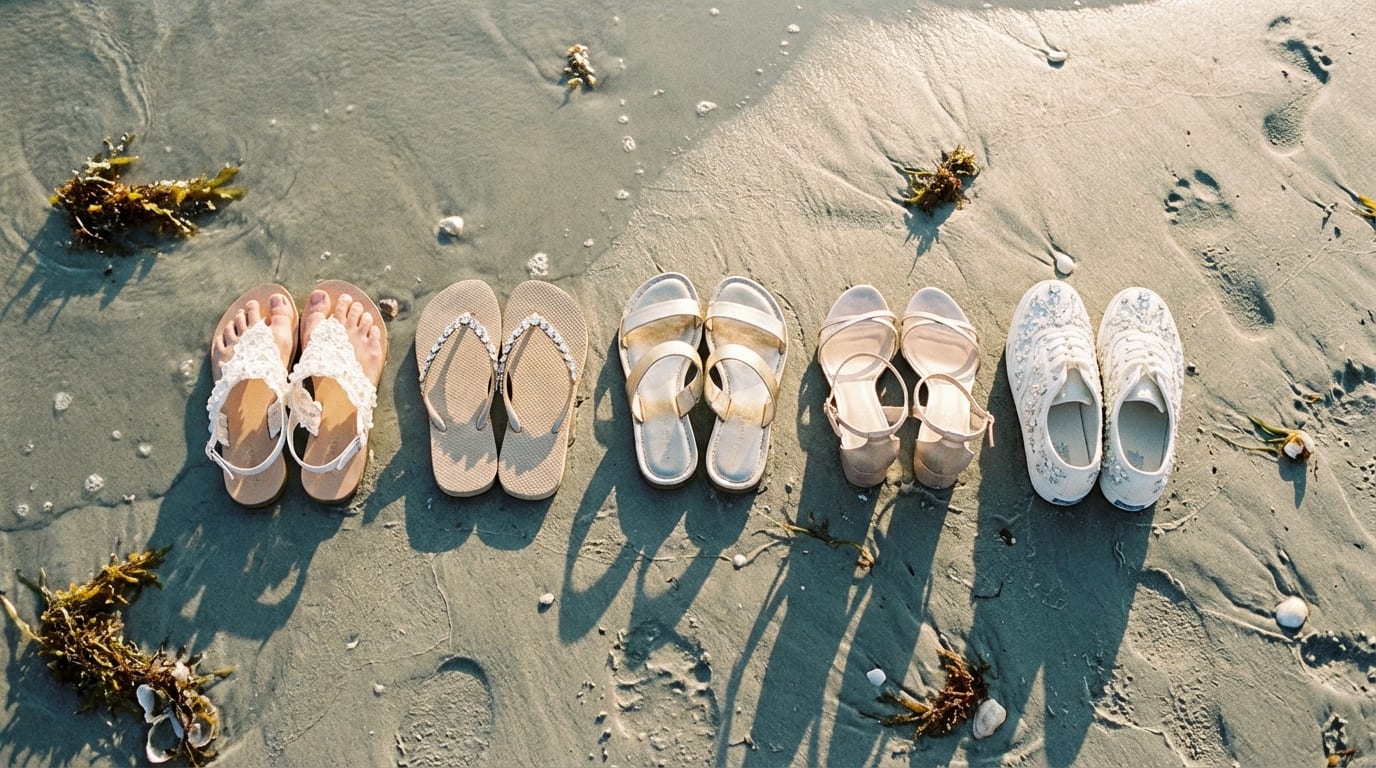
Footwear is the single most common source of confusion for beach wedding guests. The strongest pattern across wedding attire guidance is to explicitly rule out impractical shoes: high heels, stilettos, and flip-flops are commonly flagged as inappropriate unless the couple specifically says otherwise [Source: Azazie]. Add a dedicated line about shoes. Something as simple as “Sand-friendly footwear recommended” or “Wedges, block heels, or dressy flats work best for our sandy ceremony site” saves guests from a sinking-heel disaster. For more ideas on what works in the sand, see our roundup of beach wedding shoe options.
If you’re planning a ceremony in a destination like Cancún or Tulum, consider providing a basket of flip-flops near the ceremony entrance for guests who need a quick shoe swap.
Should You Specify Colors or Styles to Avoid?
Yes. Explicitly ruling out white/ivory, very dark outfits, and heavy fabrics removes guesswork and prevents the most common guest-attire mistakes at beach weddings.
The strongest pattern across wedding attire guidance is to name specific exclusions, such as white/ivory, very dark or heavy-looking outfits, and overly casual footwear or fabrics, rather than leaving guests to guess [Source: Azazie]. For beach settings specifically, several guides note that black can feel too heavy, too formal, or heat-absorbing for daytime ceremonies, and neon colors can distract in photos unless the couple specifically wants a bold theme. According to industry data, roughly 70% of couples now include some form of dress code guidance on their wedding websites, a figure that many wedding planners report is even higher for destination and beach events.
Heavy fabrics like wool, velvet, and brocade, along with three-piece suits and tuxedos, are repeatedly discouraged for beach settings because they trap heat and feel mismatched to the environment [Source: Reddit r/weddingplanning].
Here are clear, elegant ways to communicate color and style guidance:
| Wording Style | Example Phrasing |
|---|---|
| Direct and polished | ”Beach formal attire; please avoid white, ivory, black, and neon colors.” |
| Fabric-focused | ”Light, breathable fabrics preferred; please no tuxedos, heavy suits, or stilettos.” |
| Color-positive | ”Guests may wear coastal tones; please avoid bridal whites and overly dark outfits.” |
| Practical and warm | ”Dressy beach attire encouraged; avoid flip-flops, shorts, and heavy fabrics.” |
What About Destination Wedding Attire Wording?
For destination weddings, add travel-friendly guidance like “lightweight fabrics that pack well” and mention whether you’re providing welcome bags with items like sunscreen or pashminas for evening chill.
Destination wedding guests are packing a suitcase, not pulling from a full closet. Your wording should acknowledge that reality. Try: “We know you’re traveling light! Wrinkle-resistant fabrics and versatile pieces that work for multiple events are a smart move.” Several wedding-planning guides note that when invitations don’t specify more than “beach,” guests often default to dressy casual or semi-formal interpretations, which is why precision matters most for destination events where repacking isn’t an option [Source: Reddit r/weddingplanning].
Cultural considerations matter too. If your wedding is in a country where local dress norms differ from what your guests are used to, a brief note helps. For example, some religious or cultural sites near beach venues may require covered shoulders. A line like “A light shawl or pashmina is handy for the evening breeze and for visiting local sites” covers both practical and cultural bases without being preachy.
How Do You Handle Multiple Events With Different Dress Codes?
Create a clear schedule on your wedding website listing each event with its own dress code, such as “Welcome Dinner: Resort Casual. Wedding Ceremony: Beach Formal. Farewell Brunch: Tropical Casual.”
Destination weddings often span two to four days with events ranging from a poolside welcome party to a formal ceremony. Guests need to pack for all of them. A simple grid on your website works well:
-
Friday Welcome Dinner: Resort Casual. Sundresses, linen shirts, sandals.
-
Saturday Ceremony & Reception: Beach Formal. Cocktail dresses, dress shirts with slacks, dressy sandals or loafers.
-
Sunday Farewell Brunch: Tropical Casual. Whatever’s comfortable. Flip-flops welcome.
This format lets guests plan their packing list event by event, reducing the “but what do I wear to the thing on Friday?” texts.
What Wording Mistakes Make Guests Show Up Dressed Wrong?
The most common errors are vague terms like “beach attire” without examples, forgetting to mention sand and heat, using traditional dress codes without beach context, and burying instructions where guests won’t find them.
Wedding planning experts consistently note that guests often feel overdressed or underdressed at beach venues, which is why clearer wording reduces uncertainty [Source: Be My Guest]. Remember, 68% of beach wedding attendees report feeling misdressed for the venue [Source: Azazie]. That statistic drops significantly when couples provide specific, layered guidance. The biggest mistakes include:
-
Writing “beach attire” with no further explanation. This is the single most ambiguous phrase you can use.
-
Using “cocktail attire” without noting it’s on sand. Guests will show up in stilettos and regret it immediately.
-
Only putting the dress code on the invitation. Many guests RSVP online and never look at the physical card again.
-
Listing only what not to wear. Positive framing (“sundresses and linen shirts recommended”) works better than a list of prohibitions (“no jeans or sneakers”) because it gives guests a clear mental image of what to aim for.
How Do You Politely Discourage Inappropriate Attire?
Use positive framing that guides toward appropriate choices rather than listing prohibitions. “Sundresses and linen shirts recommended” works better than “no jeans or sneakers.”
The psychology here is simple: people respond better to being told what to do than what not to do. Instead of a list of banned items, paint a picture of what looks great:
-
Negative: “Please do not wear jeans, sneakers, tank tops, or flip-flops.”
-
Positive: “Light, breezy fabrics and dressy sandals are perfect for our beachside celebration.”
Both communicate the same information. The second version feels like a helpful suggestion rather than a dress code enforcement policy.
For guests who still show up in something unexpected, experienced planners recommend having a small stash of pashminas, flip-flops, and even a few neutral wraps available. It’s a gracious backup that solves the problem without any awkward conversations.
Frequently Asked Questions
What’s the best short phrase for a beach wedding dress code on an invitation?
“Beach Formal Attire Requested” or “Attire: Beach Casual” are clean, clear options. Follow the label with one short line about footwear or fabric if space allows, such as “sand-friendly shoes recommended.”
Should I put the dress code on the invitation or the details card?
Either works. Traditionally, the dress code goes on the details or enclosure card rather than the invitation itself. If you’re using a single-card design, placing it at the bottom in a slightly smaller font keeps it visible without competing with the main event information.
How do I tell guests not to wear white without sounding rude?
Frame it positively by suggesting colors instead. “We’d love to see you in ocean blues, corals, and tropical prints!” communicates the same message. Multiple attire guides recommend explicitly ruling out white and ivory for beach weddings since light-colored outfits can read as bridal in outdoor settings [Source: Azazie].
Is “island chic” a clear dress code?
Not really. Terms like “island chic,” “tropical elegance,” and “coastal vibes” sound appealing but leave too much room for interpretation. Pair any creative label with concrete examples: “Island Chic: think cocktail dresses, linen suits, and dressy sandals.”
What if my beach wedding has both a sand ceremony and an indoor reception?
Note both settings in your wording. Example: “Our ceremony is on the beach (sand-friendly shoes recommended!) and the reception moves indoors to an air-conditioned ballroom. Beach formal attire is perfect for both.” This lets guests plan for sand without worrying about being underdressed for the reception.
How far in advance should I communicate the dress code?
Include it with your invitation (typically six to eight weeks before the wedding), expand on your website as soon as it’s live, and send a reminder email two to three weeks before the event. For destination weddings, earlier is better since guests need to pack and may shop for new items.
Can I include photos of appropriate outfits on my wedding website?
Absolutely. A small mood board or two to three example photos is one of the most effective ways to communicate your vision. Guests process visual examples faster than written descriptions, and it removes almost all ambiguity about what you’re expecting.
What should I do if a guest ignores the dress code entirely?
Let it go gracefully. Having a few backup items on hand (pashminas for chilly evenings, flip-flops for heel emergencies) solves most practical problems. Your photographer can also work with positioning and groupings to minimize any visual mismatches in formal photos.