Do You Need to Give Gifts to Destination Wedding Guests?
Destination wedding guest gifts aren’t required by etiquette, but most couples provide welcome items or small favors as a genuine thank-you for guests’ travel investment and time commitment.
Your guests are spending serious money to show up for you. A 2024 survey found destination wedding guests spend about $1,400 on travel and accommodations alone, and for international weddings, total out-of-pocket costs can climb to $2,514 per person. [Source: WeddingSift] That’s a significant financial gesture, and a thoughtful welcome gift acknowledges it.
The Knot’s etiquette guidance confirms that destination wedding favors are “not mandatory” but are often given so guests feel appreciated for traveling. [Source: Destination Wedding Details] One planning guide frames these as essentially “wedding gifts for guests,” typically paid for by the couple or their families. The key distinction: welcome bags are baseline hospitality. Additional gifts beyond that are a bonus, not an obligation.
Because average destination weddings host 30 to 60 guests (versus 100 to 150 at local weddings), the per-person budget becomes more manageable. [Source: Destify] Smaller guest counts mean you can invest in quality over quantity without blowing your budget. Part of that smaller headcount is invitees who simply can’t make the trip; our take on declining a destination wedding invitation explains why that’s normal.
What Makes a Good Destination Wedding Guest Gift?
Effective destination wedding guest gifts are lightweight, consumable or immediately useful, locally relevant, and fit easily in carry-on luggage without creating customs or packing complications.
Weight and packability matter more than perceived value
A beautifully packaged candle that weighs two pounds will get left on the hotel nightstand. A $5 packet of locally roasted coffee that slips into a shoe inside a suitcase will make it home. Every gift decision should pass the “carry-on test”: can a guest fit this into their existing luggage without rearranging anything? A 2024 Harris Poll of 842 recently married couples found that 89% received at least one gift they never used or returned. [Source: WeddingSift] Don’t let your favor become that statistic.
Consumables eliminate the “what do I do with this” problem
Edible gifts and personalized items are the most popular favor categories globally, and for good reason. [Source: Easy Weddings] Consumables get used, enjoyed, and remembered without cluttering anyone’s home. Food, drinks, and bath products disappear naturally, leaving only the memory of your thoughtfulness.
Local relevance beats generic luxury
A bottle of hot sauce from a Oaxacan market tells a story. A mass-produced keychain from Amazon does not. Locally sourced items connect your guests to the destination, support the local economy, and feel more intentional than anything you could order in bulk online. If you’re planning a Cancun wedding, think artisan vanilla extract. For a Hawaii celebration, consider macadamia nut butter or Kona coffee.
Welcome Bag Essentials (The Practical Baseline)
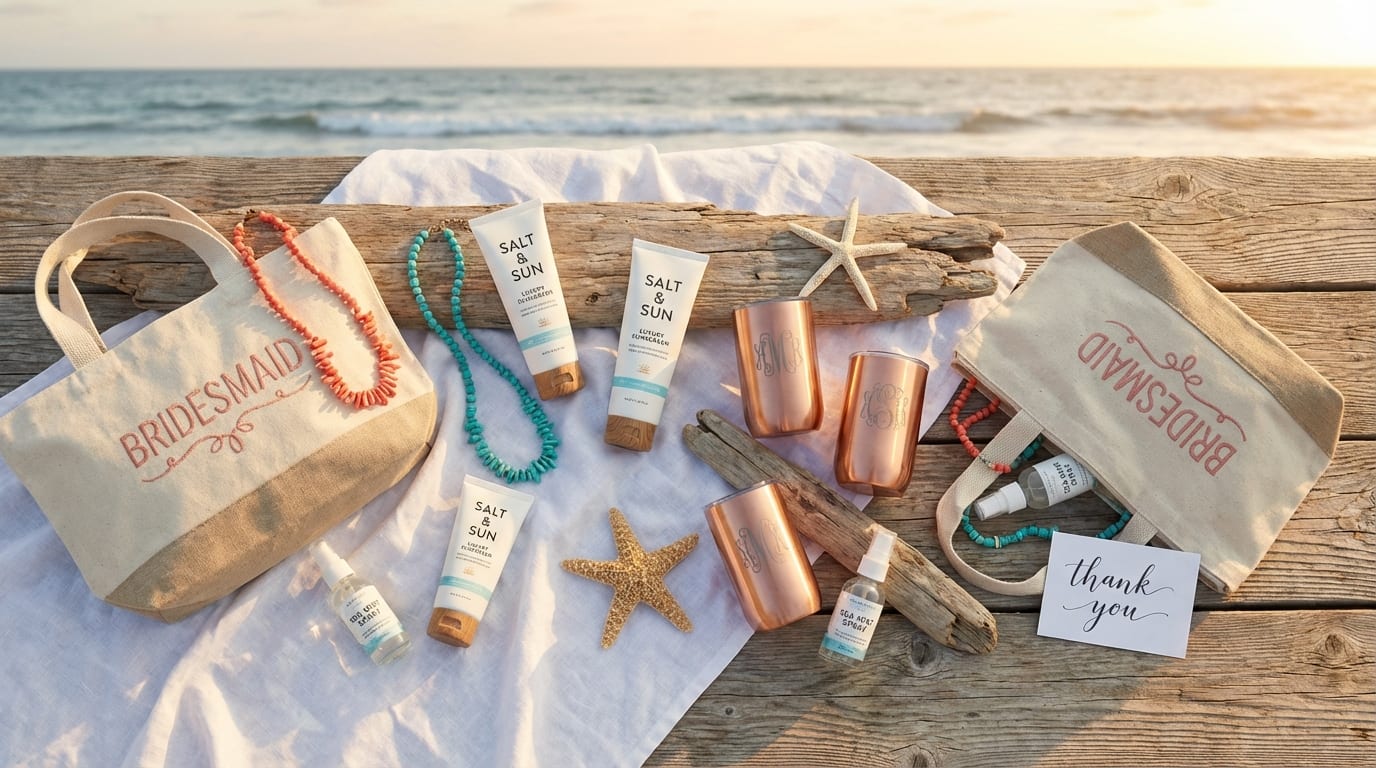
Welcome bags for destination weddings should include bottled water, local snacks, sunscreen, an event itinerary, and destination-specific practical items like bug spray or electrolyte packets.
What to include in every welcome bag
-
Bottled water (two bottles minimum, especially for tropical destinations)
-
Local snacks to tide guests over after a long flight
-
Sunscreen (reef-safe if you’re near the ocean)
-
Printed itinerary with event times, locations, and contact numbers
-
Pain relievers and antacids
-
Electrolyte packets for altitude or heat
-
Bug spray (essential for tropical and jungle venues)
-
A personal note thanking guests for making the trip
Cost breakdown: $15-35 per bag depending on destination
Planning guides place the sweet spot at $15 to $25 per bag, though costs can range from $10 to $100 depending on what you include. [Source: Destination Wedding Details] The Knot reports couples spend an average of $501 total on wedding favors for domestic destination weddings and $676 for international ones. For a 40-guest wedding, that works out to roughly $12 to $17 per person on favors alone, before welcome bag essentials.
Delivery logistics: hotel coordination and timing
Contact your hotel or resort’s guest services team at least one week before arrival. Most properties will distribute bags to guest rooms for a small fee or complimentary as part of a wedding block. Confirm the process for late arrivals and room changes so nobody gets missed.
Local Food and Beverage Gifts
Locally sourced coffee, hot sauce, rum, olive oil, or regional snacks cost $8 to $25 per guest, support the local economy, and give guests an authentic taste of the destination to bring home.
Coffee and tea from local roasters
Small bags (2 to 4 oz) of locally roasted coffee are lightweight, universally appreciated, and easy to pack. In Costa Rica, expect to pay $5 to $10 per bag from farm-direct roasters. In Bali, single-origin options run about IDR 75,000 to 150,000 (roughly $5 to $10). Hawaiian Kona coffee runs higher, typically $12 to $18 for a small gift-sized bag.
Regional spirits and liqueurs
Mini bottles (50ml to 100ml) of local spirits make memorable favors. Think mezcal in Mexico, limoncello in Italy, or rum in Jamaica. Costs range from $3 to $12 per mini bottle depending on the spirit and destination. Just keep bottles under 3.4 oz (100ml) so guests can carry them on if needed.
Artisan food products (hot sauce, honey, spices)
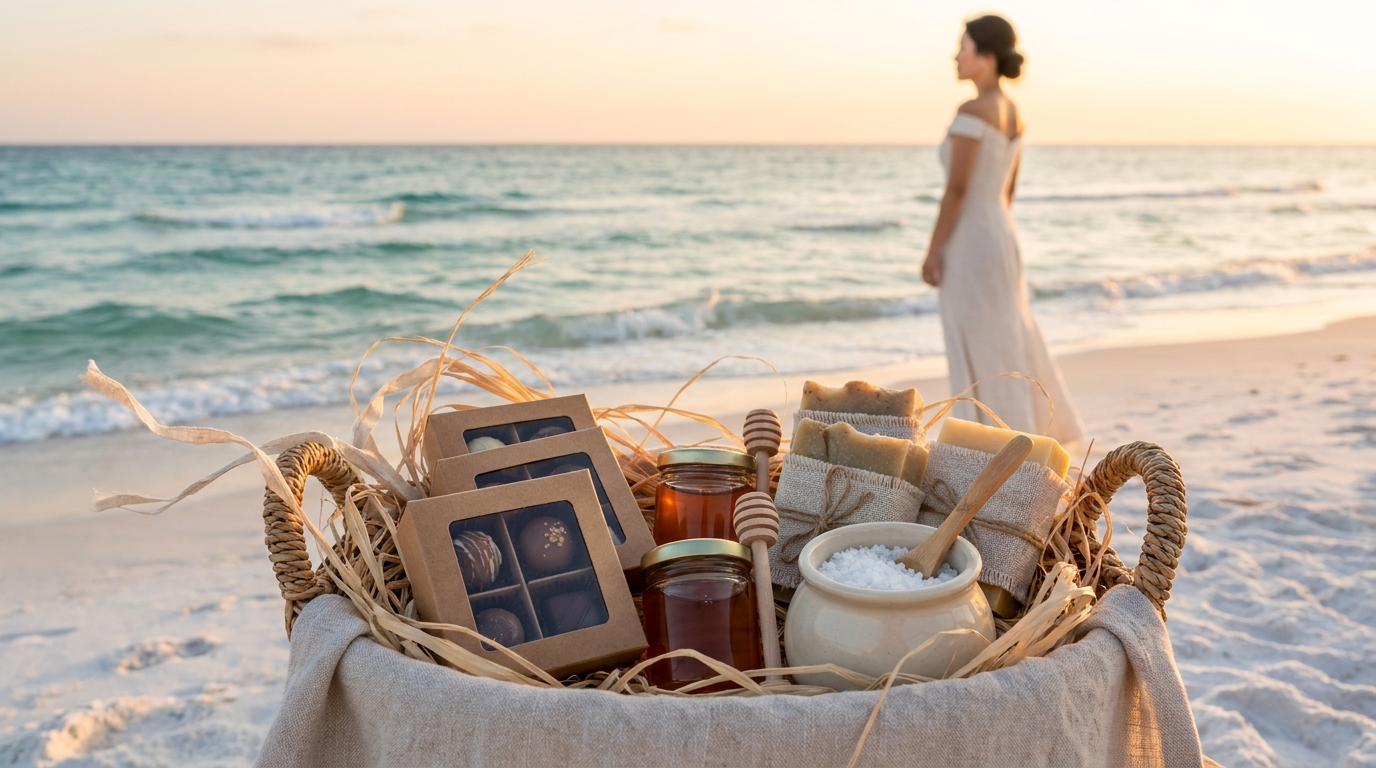
The global trend toward edible favors is well documented. In Australia, 70% of couples give wedding favors, and edible gifts rank as the most popular category. [Source: Easy Weddings] That preference holds across destinations. Small jars of local honey ($4 to $8), artisan hot sauce ($5 to $10), or spice blends ($3 to $7) travel well and get used at home.
Customs considerations for alcohol and food items
U.S. Customs allows travelers to bring back most sealed, commercially packaged food items. Fresh fruits, meats, and certain cheeses face restrictions. Alcohol is generally permitted (one liter duty-free for travelers 21+), but quantities above that may incur duties. Include a small card in your welcome bag noting any relevant customs tips for the specific destination. Regulations change, so encourage guests to check CBP guidelines before packing.
Wearable Gifts Guests Will Actually Use
Practical wearables like custom sunglasses ($3 to $8), embroidered hats ($12 to $18), or destination-branded koozies ($2 to $4) serve dual purposes as gifts and wedding day accessories.
Sunglasses and sun hats
For beach ceremonies, matching sunglasses photograph well and protect guests from glare during the vows. Budget $3 to $8 per pair for quality options with UV protection. Floppy sun hats or baseball caps embroidered with a wedding logo cost $12 to $18 each and work especially well for pool parties or day-after brunches.
Custom koozies and drinkware
Koozies weigh almost nothing, cost $2 to $4 each, and get used immediately at welcome events. They’re one of the few favors guests will genuinely pack and reuse at home. Silicone wine tumblers ($6 to $10) are a step up for wine-country or vineyard weddings.
Beach bags and totes
Canvas tote bags ($5 to $12) double as the welcome bag itself and a beach carryall for the rest of the trip. Choose natural fibers and a simple, attractive design guests won’t be embarrassed to reuse.
Sizing challenges and how to handle them
Stick to one-size-fits-all items whenever possible. Hats with adjustable closures, oversized totes, and universal-fit sunglasses avoid the awkwardness of wrong sizes. If you’re gifting sarongs or cover-ups, choose generous dimensions that work across body types.
Experience-Based Gifts Instead of Physical Items
Experience gifts like welcome cocktails ($8 to $15 per person), group excursion subsidies ($20 to $50 per guest), or spa credit vouchers eliminate packing concerns entirely while creating shared memories.
A Tinggly survey of over 1,000 respondents found that 82% of consumers believe experiences are significantly more memorable than typical physical wedding gifts. [Source: PR Underground] That preference extends to what guests value receiving, too.
Welcome reception or cocktail hour
A hosted welcome cocktail the evening before the wedding costs $8 to $15 per person at most resort bars and gives guests a chance to meet each other. This is often the most appreciated “gift” of the entire trip.
Subsidized group activities
Covering part of a group snorkeling trip, catamaran cruise, or guided food tour ($20 to $50 per guest) turns your wedding weekend into a vacation highlight. The same Tinggly survey found 28% of respondents most wanted an adventure experience as a gift. [Source: PR Underground]
Spa or resort credit vouchers
Spa and wellness experiences account for roughly 20 to 25% of global experience-gift demand. A $25 to $50 spa credit per guest room lets people choose their own treatment. Coordinate with the resort spa to set up a billing code tied to your wedding block.
How to communicate experience gifts effectively
Include a printed card in the welcome bag explaining what’s been arranged. Something like: “We’ve arranged a sunset catamaran cruise for Saturday afternoon, our treat. Details and sign-up at [wedding website URL].” Digital communication works as a backup, but a physical card feels more intentional.
Personalized but Practical Options
Personalized gifts that balance sentiment with utility include custom luggage tags ($4 to $8), engraved bottle openers ($6 to $12), or monogrammed passport holders ($10 to $18) that guests use well beyond the wedding.
Travel accessories with personalization
Luggage tags with each guest’s name and your wedding date, leather passport holders, or embossed travel wallets feel personal without being purely decorative. These items address real travel needs, which matters when 73% of recently married couples say they prefer practical, experience-oriented gifts over traditional items. [Source: WeddingSift]
Custom playing cards or games
A custom deck of playing cards ($5 to $10) with your wedding artwork or destination illustrations gives guests entertainment for the trip and beyond. Lightweight, flat, and universally useful.
Engraved keepsakes that serve a function
Bottle openers, compact mirrors, or multi-tools engraved with the wedding date and destination straddle the line between sentimental and functional. Budget $6 to $15 per item depending on material and engraving complexity.
Gifts You Can Source at the Destination
Destination-sourced gifts like local artisan soaps ($5 to $12), handwoven textiles ($15 to $30), or regional ceramics ($10 to $25) reduce shipping costs and support local craftspeople.
Working with local artisans and markets
Many popular wedding destinations have thriving artisan markets. In Tulum, you’ll find handmade coconut candles and woven bracelets. Santorini offers volcanic soap and local olive oil. Your wedding planner or resort concierge can connect you with trusted vendors who handle bulk orders.
Quality control when buying in bulk locally
Order a sample batch before committing to a full order. Check for consistency in packaging, size, and quality. If you’re buying from a market vendor, negotiate a bulk price and get a written agreement on delivery date, quantity, and returns for damaged items.
Lead time: how early to arrive for sourcing
Plan to arrive at least 3 to 5 days before the wedding if you’re sourcing gifts locally. This gives you time to visit vendors, approve samples, arrange delivery to the hotel, and assemble welcome bags. If that timeline feels tight, have your planner handle sourcing in advance and send you photos for approval.
Digital and Photo Gifts
Digital gifts like custom Spotify playlists, shared photo albums, or QR codes linking to destination guides cost nearly nothing but require thoughtful curation to feel substantial.
Custom playlists and digital content
A curated Spotify playlist titled something like “Cancún Vibes: Sarah & Mike’s Wedding Weekend” takes an hour to build and gives guests a soundtrack for the trip. Include a QR code card in the welcome bag linking directly to it.
Photo sharing and album access
Set up a shared Google Photos album or use an app like Guest so everyone can upload and access photos from the weekend. After the wedding, send a curated digital album as a follow-up thank-you.
Why purely digital gifts work better as additions than standalone gifts
A QR code on a card, by itself, doesn’t feel like a gift. Paired with a bag of local coffee and a handwritten note, it becomes part of a thoughtful package. Use digital elements to enhance physical gifts, not replace them.
What to Skip: Gifts That Create Problems
Avoid glass items, liquids over 3.4 oz without checked bag consideration, perishables requiring refrigeration, and anything bulky that forces guests to check bags or leave items behind.
Fragile items and TSA nightmares
Glass bottles, ceramic mugs, and framed photos are breakage risks. If a guest has to wrap your gift in dirty laundry to protect it, you’ve created a problem, not a memory. Liquids over 3.4 oz can’t go through TSA in carry-ons, so full-size bottles of anything require checked luggage.
Oversized gifts that don’t fit in luggage
Large woven baskets, oversized hats without crushable construction, and bulky blankets look great on a welcome table but terrible crammed into a roller bag. If a guest flew in with a carry-on only, your gift shouldn’t force them to check a bag on the way home.
Perishables and temperature-sensitive items
Chocolate melts in tropical heat. Fresh baked goods go stale in transit. Anything requiring refrigeration will be abandoned. Stick to shelf-stable consumables that can survive a day in a suitcase in a plane’s cargo hold.
How Much Should You Spend Per Guest?
Most destination wedding couples spend $15 to $40 per guest on welcome items and gifts combined, with higher budgets for smaller weddings and lower per-person costs for groups over 75.
Budget benchmarks by destination and guest count
The Knot reports average total favor spending of $485 for domestic destination weddings and $676 for international ones. [Source: Destination Wedding Details] With average destination wedding guest counts of 30 to 60, that translates to roughly $8 to $22 per person on favors alone, before welcome bag essentials. Adding welcome bag basics pushes the total to $15 to $40 per guest for most couples.
Where to allocate budget: quality vs. quantity
Spend more on one or two standout items rather than filling a bag with ten cheap trinkets. A $12 bag of local coffee and a $5 handwritten card with a custom playlist QR code will outperform a bag stuffed with $1 items every time.
Cost-saving strategies that don’t look cheap
-
Buy consumables directly from local producers (skip the markup from tourist shops)
-
Use the tote bag as both the gift bag and a gift itself
-
Combine a physical welcome bag with an experience gift (hosted cocktail hour) instead of doubling up on physical items
-
Order in bulk and negotiate, especially at local markets where vendors expect it
Costs vary by destination, season, and vendor. These figures represent typical ranges, not guarantees.
Timing and Delivery Logistics
Deliver welcome bags to guest rooms 2 to 4 hours before arrival when possible, coordinate with hotel staff at least one week prior, and have a backup plan for late arrivals or room changes.
Coordinating with resort or hotel staff
Email the hotel’s events or group coordinator with your guest list, room assignments, and delivery instructions. Most resorts that regularly host weddings have a system for this. Confirm whether there’s a per-bag delivery fee (typically $0 to $5 per room) and whether staff will handle room changes automatically.
Shipping vs. carrying gifts in your luggage
For domestic destinations like Hawaii, shipping a box of non-perishable items via USPS or UPS to the hotel is straightforward. For international destinations, customs fees and delays make shipping risky. Many couples pack flat, lightweight items (koozies, luggage tags, printed cards) in their own luggage and source heavier items (water, snacks, sunscreen) locally.
Backup plans for delivery failures
Designate a wedding party member as the “bag backup” person. Keep 5 to 10 extra bags assembled for last-minute room changes, plus-ones, or guests who arrive after initial delivery. Store extras with the front desk or in your own room.
Comparison: 17 Destination Wedding Guest Gift Ideas Ranked
Top-ranked destination wedding guest gifts balance practicality, packability, and perceived value, with local consumables and wearable accessories scoring highest for guest satisfaction and logistical ease.
| Gift Idea | Cost per Guest | Packability (1-5) | Guest Utility (1-5) | Local Sourcing Ease (1-5) | Overall Score (/15) |
|---|---|---|---|---|---|
| Local roasted coffee (2-4 oz bag) | $5–$12 | 5 | 5 | 5 | 15 |
| Custom sunglasses (UV protection) | $3–$8 | 4 | 5 | 3 | 12 |
| Artisan hot sauce (mini bottle) | $5–$10 | 4 | 4 | 5 | 13 |
| Welcome cocktail hour (hosted) | $8–$15 | 5* | 5 | 5 | 15 |
| Custom koozies | $2–$4 | 5 | 4 | 2 | 11 |
| Local honey (small jar) | $4–$8 | 4 | 4 | 5 | 13 |
| Canvas tote bag | $5–$12 | 5 | 4 | 3 | 12 |
| Spa or resort credit voucher | $25–$50 | 5* | 5 | 5 | 15 |
| Custom luggage tags | $4–$8 | 5 | 4 | 2 | 11 |
| Mini regional spirits (50ml) | $3–$12 | 4 | 4 | 5 | 13 |
| Artisan soap (locally made) | $5–$12 | 4 | 4 | 5 | 13 |
| Embroidered hat | $12–$18 | 3 | 4 | 3 | 10 |
| Engraved bottle opener | $6–$12 | 5 | 3 | 2 | 10 |
| Subsidized group excursion | $20–$50 | 5* | 5 | 5 | 15 |
| Local spice blend | $3–$7 | 5 | 4 | 5 | 14 |
| Custom playing cards | $5–$10 | 5 | 3 | 2 | 10 |
| Handwoven bracelet or textile | $5–$15 | 5 | 3 | 5 | 13 |
*Experience-based gifts score 5 for packability because there’s nothing to pack. Scores reflect typical guest feedback and planner recommendations. Costs vary by destination and vendor.
Our Recommendation: What Works for Different Wedding Styles
Beach weddings benefit from sun protection items and local beverages, mountain weddings suit cozy consumables and outdoor gear, while city destination weddings work best with neighborhood food tours or local artisan goods.
Best gifts for beach destination weddings
Sun-focused items dominate here. Custom sunglasses, reef-safe sunscreen, a canvas tote, and a mini bottle of local rum or mezcal hit every note. For a Jamaica wedding, add Blue Mountain coffee and a koozie. For Punta Cana, locally made mamajuana liqueur and coconut-based skincare products work well.
Mountain and adventure wedding gifts
Think warmth and fuel. Local honey, artisan chocolate, a custom insulated tumbler, and trail mix from a local producer. For Colorado or Smoky Mountain weddings, add electrolyte packets (altitude is real) and a mini bottle of local bourbon or craft beer.
Urban destination wedding options
City weddings open the door to food-tour vouchers, neighborhood walking-guide cards, and curated local snack boxes. For a Santorini wedding, a small bottle of local olive oil and volcanic soap. For a European city, a bakery gift card or a curated map of your favorite spots.
All-inclusive resort considerations
At all-inclusive resorts, guests already have food and drinks covered. Focus your gift budget on items they can’t get at the resort: local artisan products, experience upgrades (spa credits, off-resort excursions), or personalized keepsakes. Skip the bottled water and snacks since those are already in their room.
Need help coordinating welcome bags and guest logistics for your destination wedding? Browse our destination planning guides for vendor recommendations, timeline templates, and budget breakdowns that account for every guest-facing detail.