Do You Actually Need an Aisle on the Beach?
No, many beach ceremonies skip formal aisles entirely. An aisle helps with guest flow and photos but isn’t structurally necessary on open sand.
Roughly 20–25% of all U.S. weddings are destination weddings, and about 45% of destination couples choose a beach setting. [Source: Zipdo] That means nearly one in ten American weddings happens on sand or near a coastline. Because beach ceremonies are so common, resorts and planners have developed standard aisle setups to handle crowd flow, officiant positioning, and photography angles. But “standard” doesn’t mean “required.”
Beach destination weddings carry an 82% attendance rate, meaning a higher share of invited guests actually show up compared with some other destination types. [Source: Zipdo] Once 40–60 people gather on sand, a defined beach wedding aisle keeps the processional clear and gives your photographer clean sightlines. Without one, guests tend to cluster unevenly, blocking views and creating awkward gaps in ceremony photos.
When an Aisle Makes Sense
-
Guest counts above 30. Average destination wedding guest counts range from 39 to 65 depending on the study. [Source: Zipdo] At that scale, a visible path prevents guests from drifting into the processional zone.
-
Formal processionals. If you have a wedding party of four or more, a defined walkway keeps spacing consistent.
-
Photography priorities. A clear aisle creates depth and framing that photographers rely on for processional and first-look shots.
When to Skip It Entirely
-
Intimate elopements or micro-weddings under 20 guests. A small circle or semicircle of chairs often looks more natural than a forced aisle.
-
Standing ceremonies. Some couples prefer guests gathered in a loose half-moon, which eliminates the need for any walkway at all.
-
Budget constraints. Skipping the aisle saves $100–$500 in decor costs and simplifies setup logistics.
What Makes a Beach Aisle Different from Indoor Aisles?
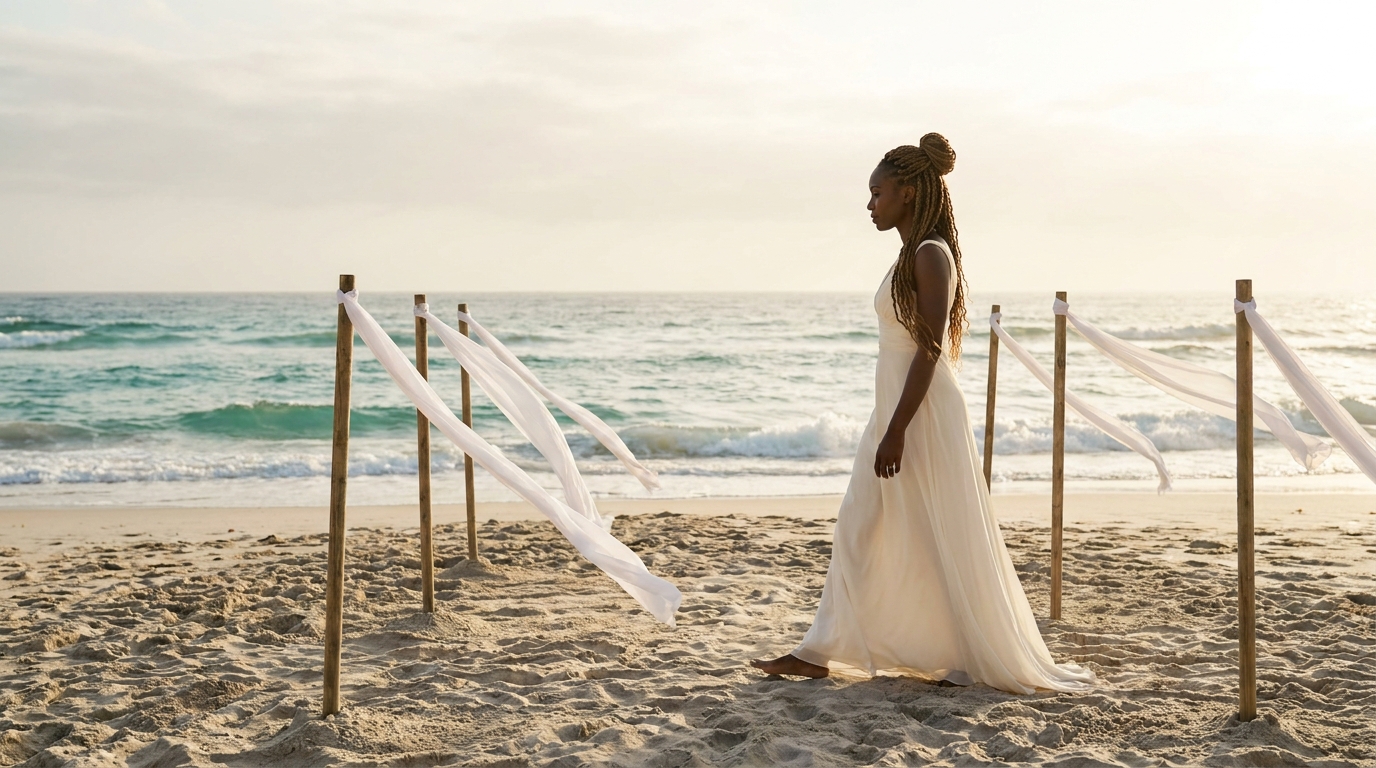
Beach aisles must resist wind, accommodate uneven sand, avoid tide zones, and use weighted or buried anchors instead of tape or stakes.
Indoor venues offer flat, stable floors where fabric runners stay put with double-sided tape. Sand offers none of that. Wind gusts along most coastlines regularly hit 10–20 mph, and even moderate breeze lifts lightweight fabric instantly. The surface itself shifts underfoot, meaning anything placed on top will sink, slide, or bunch within minutes.
About 40% of destination weddings are held at resorts or hotels, which usually provide preset aisle layouts as part of their ceremony package. [Source: Gitnux] These resort setups are optimized for sand conditions: weighted lanterns, buried stakes, and heavy natural materials replace the tape-and-fabric approach that works indoors. If you’re planning a beach wedding decoration scheme, every element needs to account for the fact that sand is not a floor.
Beach Wedding Aisle Ideas That Actually Stay Put
Effective beach aisles use petals, shells, lanterns with sand fill, driftwood markers, bamboo torches, or no physical markers at all, just chair placement.
The following 12 setups are ranked by practicality. Each one has been tested in coastal wind conditions by planners and couples who learned what works the hard way.
1. Petal or Flower Scatter (No Runner)
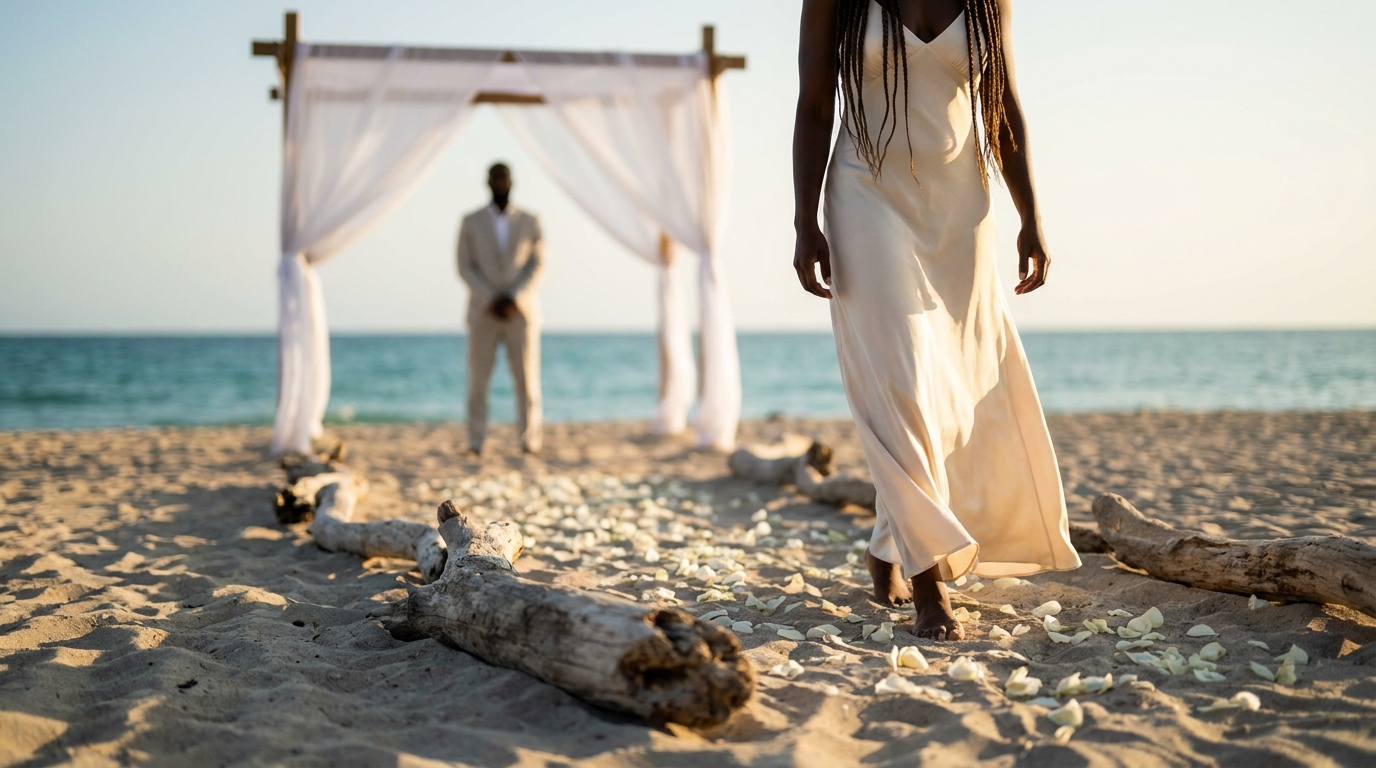
Loose petals scattered directly on sand create a soft, colorful border without any fabric to blow away. Use heavier tropical petals like plumeria or orchid rather than lightweight rose petals, which catch wind. Budget: $50–$150 in materials for a 30-foot aisle.
2. Seashell or Starfish Border
Shells and starfish are heavy enough to stay put in moderate wind. Line them along both sides of the aisle, pressing each piece slightly into the sand. Collected shells cost nothing; purchased starfish run about $1–$3 each from craft suppliers.
3. Lanterns Filled with Sand
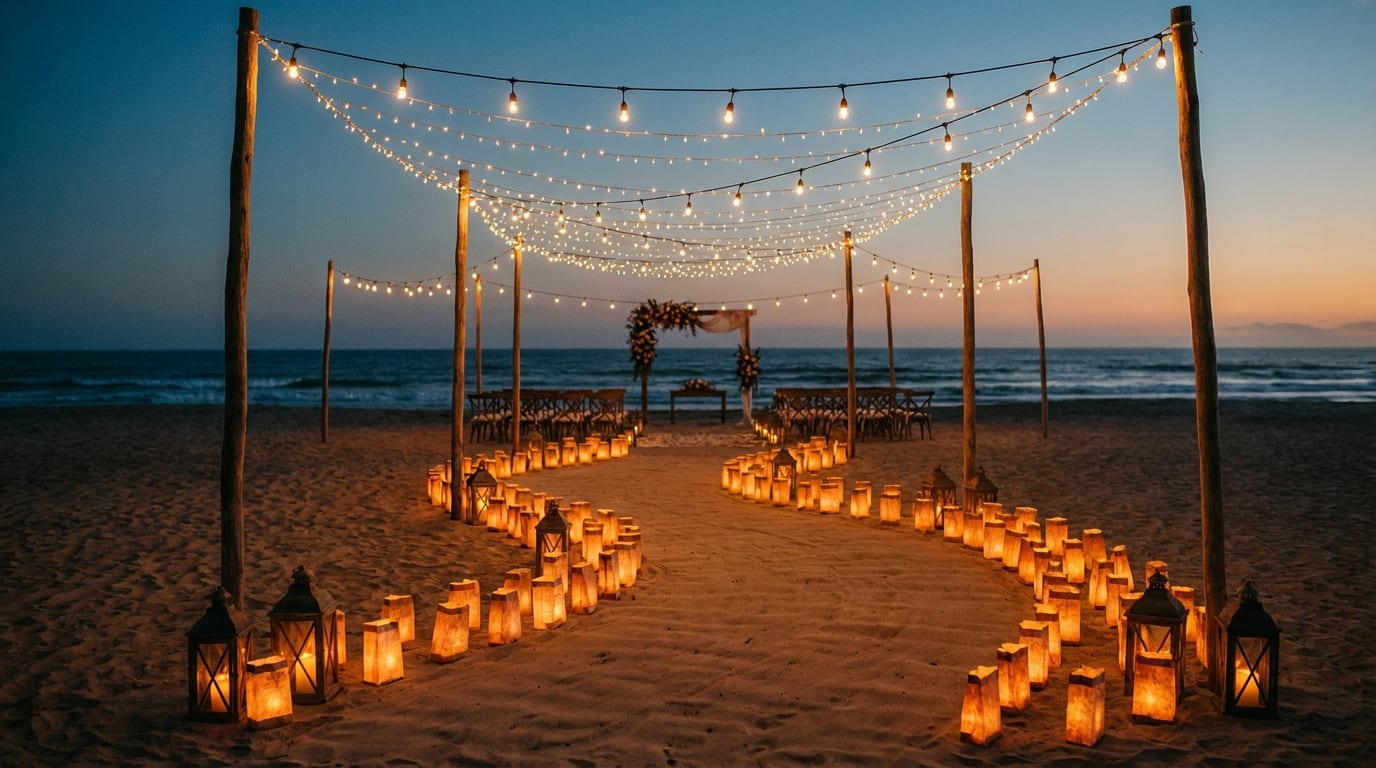
Metal or glass lanterns filled two-thirds with wet sand become self-anchoring. Place them every 4–6 feet along the aisle. A set of 10–12 lanterns typically rents for $150–$300 or can be purchased for $100–$250.
4. Driftwood or Bamboo Markers
Upright driftwood pieces or bamboo poles driven 12–18 inches into the sand create a natural, coastal look. Connect them with twine or leave them freestanding. Sourcing driftwood locally is often free; bamboo poles cost $2–$5 each.
5. Tiki Torches or Shepherd’s Hooks
Tiki torches pushed deep into sand serve double duty as aisle markers and ambient lighting for sunset ceremonies. Shepherd’s hooks with hanging mason jars or small flower arrangements work similarly. Drive them at least 18 inches into sand for stability.
6. Fabric Runner Buried at Edges
If you want a runner, use heavy burlap or jute. Dig a 4-inch trench along each edge, lay the fabric flat, and bury the edges with packed wet sand. This prevents bunching and blowing. Simple burlap runners start under $40. [Source: Destination Wedding Experts]
7. Wooden Plank Walkway
Wooden planks or pallets laid end-to-end create a stable, flat surface. This is the best option for guests with mobility concerns. Rental costs typically run $400–$1,500 depending on length and wood type.
8. Rope with Buoys or Floats
Thick nautical rope strung between short posts, with decorative buoys or floats attached, gives a distinctly coastal feel. The rope’s weight keeps it low, and buried posts hold the line taut.
9. Potted Palms or Tropical Plants
Potted plants are heavy, wind-resistant, and transition easily to reception decor. Place them at the aisle entrance and at intervals along the walkway. Rental costs vary by plant size, typically $20–$50 per pot.
10. Candles in Hurricane Vases
Hurricane glass protects flames from wind. Fill the base of each vase with sand for extra weight. Best for sunset or evening ceremonies. Use LED candles if your venue prohibits open flame on the beach.
11. Chair Placement Only (No Physical Aisle)
Simply spacing chairs with a clear gap in the center creates a natural aisle without any additional decor. This is the most wind-proof, budget-friendly option, and it photographs beautifully. The standard aisle width of 4–6 feet applies here.
12. Natural Beach Elements (Stones, Coral, Driftwood)
Gathered stones, ethically sourced coral pieces, or mixed driftwood arranged along the aisle edges blend with the environment. These elements are heavy, free (if collected), and require zero anchoring.
Should You Use a Traditional Aisle Runner on Sand?
Traditional fabric runners usually fail on sand. They blow away, bunch up, and collect sand. Burlap or jute runners buried at edges work better.
Outdoor planners consistently note that fabric runners on uneven surfaces like sand can bunch, wrinkle, and shift, directly increasing tripping risk for guests in heels. [Source: Flowers by Willows] Beach wedding guides stress that runners must withstand sand, wind, and outdoor elements, and traditional lightweight fabric generally doesn’t meet that requirement.
If you’re set on a runner, choose heavy-weave burlap, jute, or sisal. Bury the edges in trenches of packed wet sand. Some couples use wooden plank walkways instead, which act like flooring rather than fabric and start under $40 for simple versions. [Source: Destination Wedding Experts] For more ideas on beach ceremony decor that holds up in coastal conditions, focus on weight and texture over appearance.
How Do You Secure Aisle Decorations in Beach Wind?
Bury stakes 12–18 inches deep, fill containers with wet sand, use sandbag weights, or anchor with fishing line tied to buried driftwood.
A Florida beach wedding company reports that arches are routinely stabilized with deep sand stakes driven 18–24 inches into the sand, plus 20–40 lb sandbags per leg. [Source: Florida Weddings] The same principles apply to aisle decor. Driving stakes at a 45-degree angle away from the item increases pull-out resistance by about 30% compared to vertical insertion. [Source: Florida Weddings]
Practical anchoring tips for specific decor types:
-
Lanterns and vases: Fill two-thirds with wet sand. Wet sand is significantly heavier than dry.
-
Shepherd’s hooks and torches: Drive at least 18 inches deep. Add a sandbag at the base if wind exceeds 15 mph.
-
Fabric or ribbon accents: Tie to buried driftwood or rebar with fishing line. The line is invisible in photos.
-
Potted plants: Choose wide, low pots with a low center of gravity. Avoid tall, narrow containers.
What’s the Best Aisle Width for a Beach Ceremony?
Four to six feet wide allows comfortable walking and good photo angles. Narrower aisles (3 feet) work for intimate groups, while wider setups (8+ feet) suit large guest counts.
Industry-standard ceremony design calls for a central aisle width of 4–6 feet to allow two people walking side-by-side and photographer movement. [Source: Gitnux] Chair spacing of 18–24 inches between seats and 36–48 inches between rows keeps sand movement manageable and the aisle visually clean.
On sand specifically, err toward the wider end. Guests shift and adjust their footing more than on hard surfaces, and a wider path gives them room to walk comfortably without stepping on decor.
How Much Does a Beach Wedding Aisle Cost?
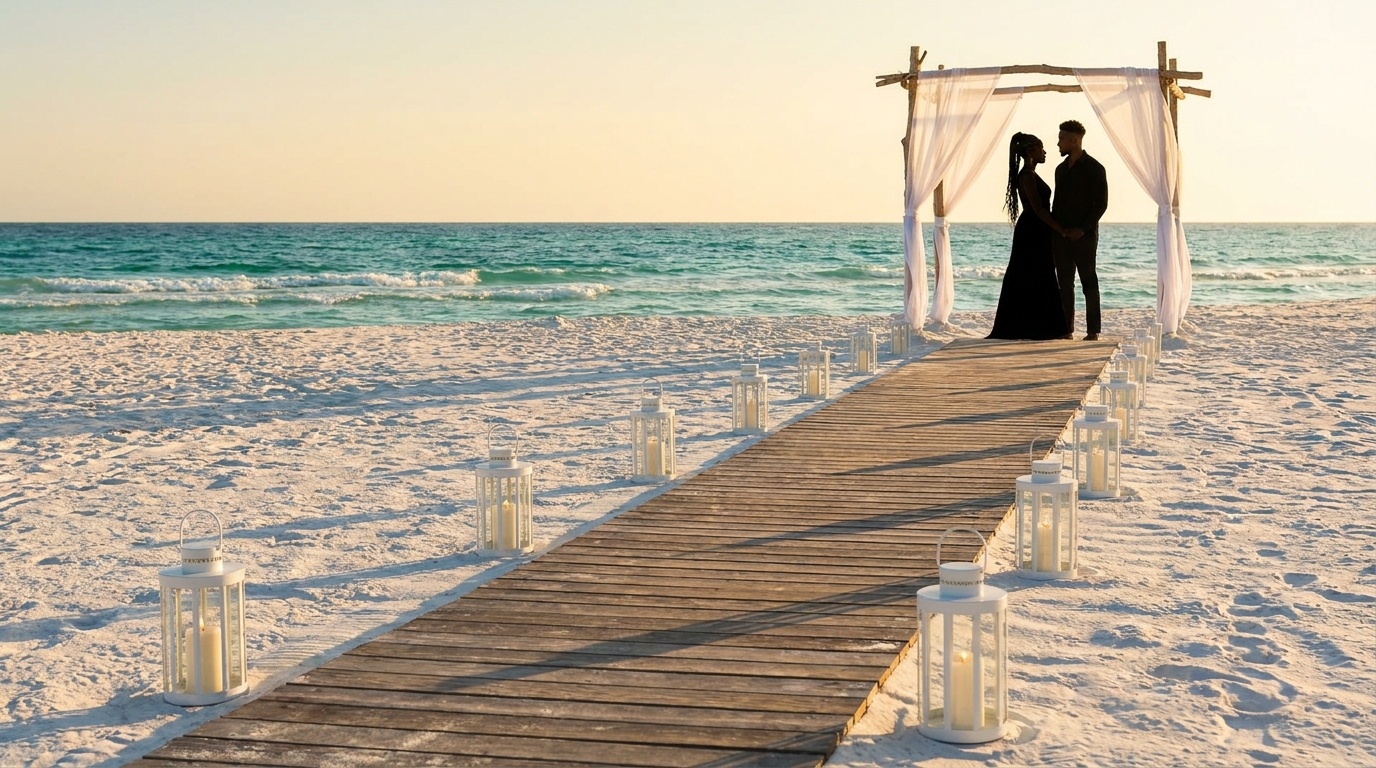
DIY petal or shell aisles cost $50–$150. Lantern or driftwood setups run $200–$500. Full plank walkways or torch-lined aisles cost $600–$1,500 to rent.
A beach wedding aisle, including permit, basic decor, chairs, and arch, typically costs about $500–$2,000 when itemized yourself, and $1,500–$4,500+ when included in professional packages. [Source: Sun and Sea Beach Weddings] Costs vary significantly by location, guest count, and design complexity.
DIY vs. Rental Cost Breakdown
| Cost Component | DIY Range | Professional/Rental Range |
|---|---|---|
| Beach permit (public beach) | $20–$500 | Included in package |
| Chairs (30–50 guests) | N/A (must rent) | $225–$500 ($7.50–$10/chair) |
| Arch/arbor | $50–$100 | $200–$300 |
| Petal or shell scatter | $50–$150 | $100–$250 |
| Lanterns (set of 10–12) | $100–$250 (purchase) | $150–$300 (rental) |
| Fabric accents/runner | $40–$100 | $50–$200 |
| Wooden plank walkway | $200–$600 (materials) | $400–$1,500 (rental) |
| Fresh florals (ceremony only) | $150–$400 | $300–$600 |
Chair rental for 50 guests runs about $500 including delivery. [Source: Wedding Spot] A DIY or rental wedding arch on the beach commonly costs $50–$300. [Source: Wedding Spot] Lanterns, vases, or fabric accents along the aisle typically add another $50–$200. [Source: The Knot]
What’s Included in Rental Packages
About 55% of beach destination weddings are all-inclusive, meaning the default package often includes an aisle runner, arch, and basic decor. [Source: Zipdo] Beach venue rental averages about $10,500, typically including standard ceremony setup. [Source: Gitnux] Before purchasing anything separately, check what your venue or resort already provides.
When Should You Set Up the Aisle (Tide and Timing)?
Set up 1–2 hours before the ceremony, after confirming tide schedules. Position the aisle at least 20 feet above the high-tide line.
Tide charts are free and available for every coastal area through NOAA or local marine forecasts. Check the high-tide time for your ceremony date and work backward. If high tide is at 4:00 PM and your ceremony is at 5:00 PM, the water will be receding, but the sand near the waterline will still be wet and unstable.
Practical timing guidelines:
-
Check tide charts 2–3 months before to confirm your ceremony time doesn’t overlap with high tide.
-
Walk the beach at the same time of day one week before the wedding to see where the water line actually reaches.
-
Set up decor 1–2 hours before the ceremony. Earlier setups risk wind damage or tide encroachment. Later setups create stress.
-
Assign one person (coordinator, friend, or vendor) to monitor the tide line during setup and adjust if needed.
What Are the Biggest Mistakes with Beach Wedding Aisles?
Common mistakes include using tape or stakes in dry sand, setting up too close to the tide, choosing lightweight decor, and forgetting backup anchors.
Dry sand has almost zero holding power. Stakes driven into dry sand pull out with minimal force. Tape adheres to nothing. These are indoor solutions applied to an outdoor problem, and they fail consistently. Industry planning guides and expert recommendations, while not peer-reviewed, are based on operational experience from hundreds of beach ceremonies. [Source: Plan A Wedding]
-
Mistake: Lightweight fabric runners without anchoring. Fix: Use heavy burlap, bury edges, or skip the runner entirely.
-
Mistake: Setting up within 15 feet of the waterline. Fix: Stay at least 20 feet above the high-tide mark.
-
Mistake: Paper or cardboard decor elements. Fix: Use materials that can handle humidity and spray, like metal, glass, or treated wood.
-
Mistake: No backup plan for wind. Fix: Bring extra sandbags, fishing line, and zip ties. They’re cheap insurance.
-
Mistake: Ignoring permit requirements. Fix: Check local regulations early. Beach permits can cost $20–$500+ depending on location. [Source: Wedding Spot]
Do Guests Need Help Walking on a Sand Aisle?
Elderly or mobility-limited guests may need arm assistance or a firmer surface. Wooden planks, packed sand, or grassy areas reduce sinking.
Sand conditions measurably slow walking pace, increase tripping risk, and disproportionately affect older guests, children, and anyone in heels. [Source: PR Destination Weddings] Most beach wedding planners recommend specific aisle modifications and footwear guidance rather than relying on guests to manage on their own.
Steps to help guests navigate sand:
-
Provide a shoe valet or designated shoe-drop area at the beach entrance.
-
Lay wooden planks or a boardwalk section for the first 10–15 feet where guests transition from pavement to sand.
-
Assign ushers to offer an arm to elderly or mobility-limited guests.
-
Note on invitations or your wedding website that the ceremony is on sand, so guests can plan footwear accordingly.
Can You Reuse Beach Aisle Decor for the Reception?
Yes. Lanterns, driftwood, shells, and potted plants transition easily to reception tables, escort card displays, or bar decor.
Planning decor that serves double duty is one of the simplest ways to stretch your budget. Lanterns from the aisle become table centerpieces. Potted palms frame the head table or buffet. Shells and starfish work as place card holders or scattered table accents. If you’re using a coordinator, ask them to build a transition plan so aisle decor moves to the reception space during cocktail hour.
The quick-reference table below compares all 12 aisle setups across the factors that matter most on sand:
| Aisle Type | Wind Resistance | Approx. Cost | Setup Time | Guest Mobility |
|---|---|---|---|---|
| Petal scatter | Moderate (use heavy petals) | $50–$150 | 15–30 min | Good |
| Seashell/starfish border | High | $0–$100 | 20–40 min | Good |
| Sand-filled lanterns | High | $150–$300 | 30–45 min | Good |
| Driftwood/bamboo markers | High (buried) | $0–$100 | 20–30 min | Good |
| Tiki torches/shepherd’s hooks | High (buried deep) | $50–$200 | 20–30 min | Good |
| Buried fabric runner | Moderate | $40–$150 | 30–45 min | Fair (trip risk) |
| Wooden plank walkway | Very high | $400–$1,500 | 60–90 min | Excellent |
| Rope with buoys | High | $50–$150 | 20–30 min | Good |
| Potted palms/plants | Very high | $100–$500 | 20–30 min | Good |
| Hurricane vase candles | High (glass shield) | $100–$300 | 20–30 min | Good |
| Chair placement only | Very high | $0 (chairs already rented) | 0 min (extra) | Good |
| Natural elements (stones, coral) | Very high | $0–$50 | 20–40 min | Good |
Need help coordinating your beach ceremony setup? Browse our directory of beach wedding planners who specialize in aisle design, anchoring logistics, and tide coordination for coastal ceremonies.